[0:00 – 1:52]
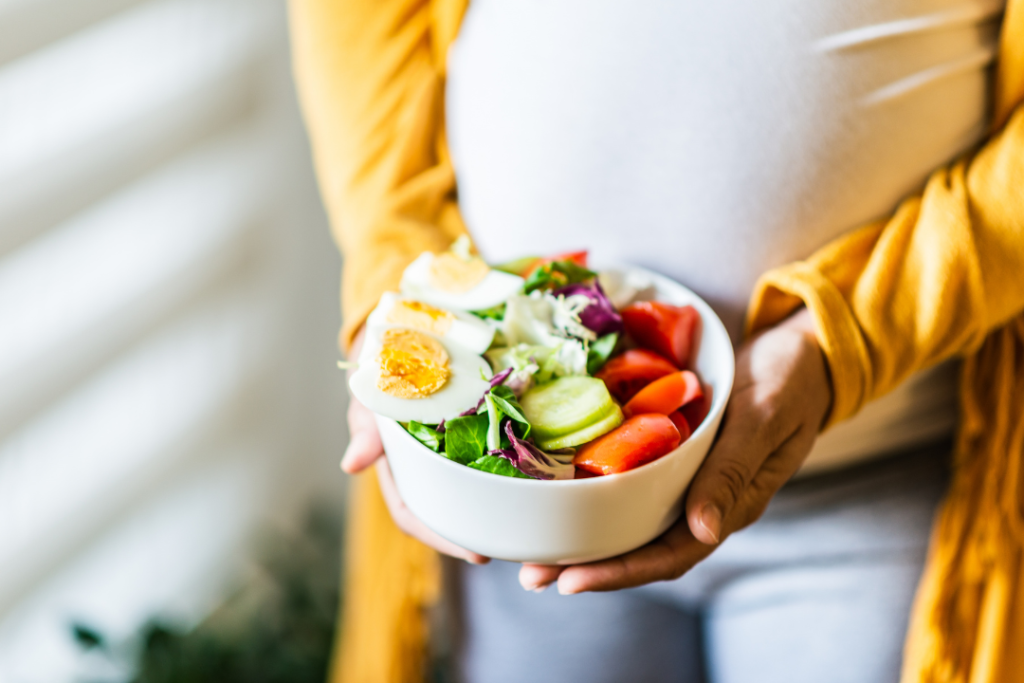
Meg Faure: You are growing a baby, but did you know that you might also be shaping the health of your grandchildren? This is a fascinating episode because this week I sit down with paediatric dietitian, Kath Megaw, for one of the most eye-opening conversations that I have had about pregnancy nutrition. I’m going to tell you a little bit about what you can expect in this episode, and it actually might just change how you think about what is on your plate. We talk about blood sugar, we talk about blood sugar stability and pregnancy, and how that doesn’t just affect nausea and energy, which of course it does, but it also sets the stage for your baby’s metabolic health from their very first breath. We go on to talk about your gut microbiome, which is one of the most powerful gifts that you can give your baby. And your baby’s gut microbiome starts with what you eat right now. Then we go on to talk about protein. Now, protein is not just about building muscle and building your baby, it’s also about building your placenta, your baby’s growth, and even the composition of your breast milk. The fourth takeaway that you will get is all around supplementation. So I asked Kath whether or not it was optional, whether or not we could just stick to what we eat in our diets as providing all our micronutrients, but the answer is that supplementation is not optional, and not all prenatal vitamins are created equal. So Kath will tell you exactly what to look for in your prenatal vitamin. And then right at the end, I asked Kath to give us a full day of eating for a six-month pregnant woman in terms of what she eats, the nutrition she takes in, and the supplements as well. And Kath gives us super practical and delicious advice on what to do in real life. So this episode is for every mom who wants to do right by her baby, who wants to give them the best start in life, but who doesn’t know where to start. Kath makes the science warm, accessible, and completely actionable. So listen now, wherever you get your podcasts.
[1:54 – 2:41]
Announcer: Welcome to Sense by Meg Faure, where we make sense of the science and art of parenting. Parenting is grey, gritty, and beautiful all at once. And my life’s work as a healthcare professional is helping parents feel more confident in a season that can feel really overwhelming. In each episode, we share honest conversations with real moms, dive into the science with experts, and simply make sense of it all in practical ways. This is your space. You’re not alone. You’re held. So let’s unpack the journey of a lifetime with Sense.
[2:41 – 3:18]
Meg Faure: Welcome back, everybody. Wonderful to have you here with us. And today we are joined by paediatric dietitian, Kath Megaw, which I am super excited about. Welcome, Kath.
Kath Megaw: Thanks, Meg. Always great to be here.
Meg Faure: Always lovely to have you. And Kath is my go-to person on anything to do with paediatric dietetics, and actually early childhood nutrition in general, which means that when we start to talk about something like pregnancy, which is the focus for today, we are really talking about the things that impact your child throughout the first few years of their life, and it actually affects their whole life. So today the focus is on pregnancy, and Kath we’re going to jump straight in. If a mom who is pregnant was to ask you what the most important thing for her pregnancy is, what would your answer be?
[3:18 – 4:32]
Kath Megaw: I would most definitely say her nutrition. We know that the first thousand days play such an important role in laying a foundation nutritionally, metabolically, physiologically for her baby later in life, but we also know that it lays down a foundation for her future grandchildren, especially if she is going to have a little girl.
Meg Faure: A little girl? So tell us about that. Why does a mom’s nutrition and pregnancy not affect the male foetus?
Kath Megaw: Well, it definitely affects her male foetus, but not necessarily the male foetus’s offspring, but it affects the female’s foetus because all the little eggs that are going to potentially become babies in the future and the mom’s grandchildren are formed in the womb, and the health of those eggs are linked to the mother’s nutrition, not necessarily her baby’s nutrition. So it actually flows through the generations like that.
Meg Faure: I think that’s absolutely incredible. I’ve always told my girls that it’s just absolutely amazing that I’ve carried my granddaughters or grandchildren too, and that’s because of course their eggs are available already in their ovaries while they’re still in utero, so that totally makes sense.
[4:33 – 5:59]
Meg Faure: Now, so let’s drill down into very specific questions. I think in some respects, nutrition and diet is one of the most contentious areas on social media. Everybody’s got very strong opinions, whether it’s high fat, low carb, whatever it is, and that obviously becomes more accentuated in pregnancy. So what I’m going to do is I’m going to drill down into the very specifics around what’s going on in the media, what trends are we seeing, and what are facts and what aren’t facts. So let’s unpack it a little bit, and I think a good place to start is with blood sugar and metabolic health, because most of us hear a huge amount about blood sugar stability during pregnancy, and actually, I’m sure you’ve heard of the Glucose Goddess, and she’s actually bringing out a pregnancy book in the next couple of months, and so there’s going to be a lot of noise on social media that our moms are seeing around blood sugar stability in pregnancy. So I guess the question is, how does blood sugar stability affect a baby’s development, and also the mom’s energy and mood and so on in pregnancy?
Kath Megaw: So it’s critical, we know that a baby born to a mom who’s got diabetes or gestational diabetes poses high risks. So a mom with diabetes or gestational diabetes has a high risk of preterm delivery, high risk of a much bigger baby who can’t control his or her blood sugar after birth, and a baby who can’t control blood sugar after birth poses risks for the baby.
[6:00 – 6:58]
Kath Megaw: So that’s just the risk factors around it, but just the mother’s overall well-being. If her blood sugar is well-controlled, she’s going to have less risk of nausea. It’s not to say it won’t be there at all, but she’ll definitely be able to manage it better. We know nausea and pregnancy is hormone-driven, but what we also know is that blood sugar plays a big role in that. So if we can control the mother’s blood sugar both in the first trimester to help with nausea, and then thereafter, it will definitely impact the mother’s health and how she feels in the pregnancy. In the past, years and years, decades ago, we would say, “Well, you can eat for two now, you’re a pregnant mom,” but now we know that’s not the case, because not only are we programming the baby’s health, but we also are setting the mom up down the line if she gains too much weight during her pregnancy for metabolic syndrome later on and a disruption in her whole metabolism.
[6:59 – 7:53]
Kath Megaw: And then also the big role sugar plays, and I know we’re going to talk more about this, is in our gut microbiome. So we do need to also manage our refined sugars and our carbohydrates intake to actually increase the health of our gut microbiome as well, which we will talk about more.
Meg Faure: Yeah. And before we move on to that, when you talk about metabolic disorders, you’re talking about things like diabetes, am I correct?
Kath Megaw: Yeah, diabetes, but also, you know, metabolic syndrome, insulin resistance, so it doesn’t have to be end-stage diabetes. Even autoimmune diseases can be affected by metabolic health. So inflammation, we know that an inflammatory response in our body can create autoimmune conditions and put people at high risk later on of like rheumatoid arthritis, lupus, those type of conditions as well. So we do want to ensure that our metabolic health is protected and maintained.
[7:53 – 9:03]
Meg Faure: So if we’re thinking about our blood sugar levels in pregnancy, is it a matter of just not eating high sugary foods? Or what do we think about on a practical level when we think about managing our blood sugar stability?
Kath Megaw: Yeah, so managing the blood sugar is obviously, if you’re going to eat food that is high sugar, very refined, it’s going to cause a steep increase in blood sugar and a steep drop then. And it’s those drops where we feel awful and that puts our body in an inflammatory response because our body is trying to protect itself. So we want to reduce the amount of very refined starches and very sugary foods, but at the same time, we want to also make sure we eat frequently the right types of foods, so that we can create a more consistent blood sugar curve as opposed to spikes and drops and spikes and drops. So carbohydrates are not bad for you, but it’s the type of carbohydrates and starches that we eat. They’re important, they’re important for delivery of energy to the mother and to the foetus.
[9:03 – 9:34]
Kath Megaw: And it is important that a mother consumes them because if she doesn’t, the body’s going to break down muscles and protein for those actual sugars. So the body’s always going to want the sugars and look for the sugars. So we would rather give it to the body in healthy carbohydrates like your whole grains, your vegetables, your fruits, those type of foods, than let the body not have access to that and then use protein to actually break it down, which has other implications.
[9:35 – 9:58]
Meg Faure: Very interesting. So that kind of is a very good segue into the gut microbiome because what we know is that the type of foods that you eat really do feed your gut microbiome and they are largely vegetable based and plant based foods. So could you give us a sense of what are the good carbs we should be looking at that? And A will stabilise our blood sugar, but more importantly maybe or equally important to feed our gut microbiome.
[9:59 – 11:13]
Kath Megaw: Yeah, so there’s, as you say, there’s some essential carbohydrate sugars that are really important, like inulin, which is a very important feeder of your gut bacteria. So when we spoke about gut microbiome in the past, we were always just focusing on probiotics and gut bacteria and what we put into our guts from a bacteria point of view. But now we know it’s actually got a lot more to do with the house in which the bacteria live and thrive, which is your gut. How healthy is that? In other words, is your inside of your gut all intact? And we have the villi, which are basically little hills inside your gut and we want to keep those very strong and firm and they’re muscles. So we want them to be able to activate movement through the gut because also another thing we know is that if food is not moving through the gut on a consistent basis, it can create a lot of unhealthy fermentation and that can then feed the unhealthy bacteria. But if we allow good movement through the gut with our strong muscles in our gut, then it allows for good active movements and good fermentation.
[11:15 – 13:24]
Kath Megaw: And this comes to the second point to your question, what foods are those? And those are all our fibrous foods. So our vegetables obviously contain that, our grains, our legumes, our lentils, peas, those type of foods. They’re also really helpful because of the types of fibre that are in the gut that they feed the gut with. And so the gut bacteria we want to proliferate is the bacteria that your gut is programmed to have. And each of us have a different gut microbiome footprint. And so our footprints all differ from person to person. So the mother’s gut footprint will be her own personal one and her baby will resemble a large portion of that footprint, especially if the baby is born via the vaginal birth canal and mom is able to breastfeed. Then it’s going to resemble the mother’s gut much more closely than a baby who’s born via C-section and didn’t have access to breast milk. They’re going to have a more adult looking gut microbiome, which has its own implications, obviously, and something that we don’t want to encourage because that increases inflammation in the baby and decreases other factors that are healthy and important. So that is the goal when a mother is eating in pregnancy is to nourish her gut microbiome. And if she’s doing that, she’s also going to maintain her sugar levels because a lot of our sugar control is from our gut. So the unhealthy bacteria, if it overgrows, it’s always going to be present. But if it over proliferates, it’s going to access a lot more sugar and create a lot more sugar spikes and dips than the healthy bacteria because they get a more consistent sugar usage in our body. So so much is happening in the gut. It is kind of the segue for different foods and different processes that happen in the body. And a healthy gut will also allow for healthy micronutrient absorption, which I know we’re going to go more into as well. So there’s so much to be said around good, healthy carbohydrates when it comes to our gut microbiome and when it comes to glucose control and our blood sugar management.
[13:24 – 14:21]
Meg Faure: Very interesting. So there’s a lot of noise in the media around this and it’s, I think, largely a lot of it is good noise because the big kind of evil that is being earmarked are ultra-processed foods, which are almost the opposite of, you know, they’re kind of the villain in the gut microbiome story. So, you know, I think most of us are becoming more conscious of not eating ultra-processed foods, but I think in pregnancy, it’s even more important. So what practical steps can a mum take that will make the biggest difference, you know, to kind of avoid ultra-processed foods?
[14:21 – 14:52]
Kath Megaw: Yeah, I think time is our biggest enemy in our society today. And I think people always feel like they want to do right and they want to do the fresh stuff and they want to cook from scratch, but don’t have the time. So I always encourage that that is where some planning does coming to play and maybe cooking up a batch of, you know, a whole lot of chicken in your air fryer and freezing it so you can defrost it, then it’s also quick and easy accessible. So it is just planning and just maybe cooking in batches so that you don’t have to always cook every single day, but you can have access to food easier.
[14:52 – 16:09]
Kath Megaw: There’s also different in South Africa. We’ve got different options to get food that is almost like homemade food that you can access and get delivered to you. So there’s different ways that you can look at that. And I always say the 80% rule, if you can get it right 80% of the time, you’re doing very, very well. And remember, if you’ve come from a highly processed diet, you’ve fallen pregnant now, and now you’re hearing this and you want to make these big changes, it’s important to know that every single change you make is going to make a significant difference. So our bodies are very adaptable and our gut microbiomes can regenerate really quickly, and that is also very encouraging. It doesn’t take years and years and years. It can actually with the right foods and actually managing the intake of what we have is one aspect of assisting our gut microbiome, but stress also plays a role in our gut microbiome. If you’re trying to eat perfectly, and then you’re actually creating those stress hormones or triggering cortisol, which is going to implicate your gut microbiome and actually going to kind of derail and undo what you’re trying to do with your food.
[16:09 – 16:18]
Kath Megaw: So it’s really saying, “What can we do? What can we manage?” Maybe it’s just starting at breakfast. Maybe it’s starting at supper time and just make little changes.
[16:18 – 17:01]
Kath Megaw: If you were buying processed Viennas, then rather buy your chicken and cook it up like I said, or a chicken sausage, maybe it would be one step up from a processed Vienna. The big thing you want to look for on labels is your E-numbers. I work with gastroenterology a lot. And one of the things that is coming out loud and clear is E-numbers and how it can damage your gut. And so it’s really, really important that we are aware of that and we want less ingredients on the label, the better. So if you are looking at buying food, that’s maybe prepackaged, just look at that and see if you can find less E-numbers, less ingredients. And remember the label, the ingredients at the top of the list is the one in most abundance.
[17:02 – 19:56]
Meg Faure: Love it. So I’m almost picturing this continuum from home cooked food that has been bought from a farm stall or market in France, which we had the experience of last year. And I mean, I’ve just never felt more healthy in my life all the way through to a McDonald’s burger. And in the middle of that kind of journey are various different stages of ultra-processed food. So if we work backwards, obviously you’re the big enemies that are quite easy to avoid, I think, are fast food, the likes of the McDonald’s burger and the kind of real fast food. So avoid that. Next step backwards are your ultra-processed foods that are prepackaged for you in a shop. So a fully made meal that you’re buying. Then you’ve got your ultra-processed ingredients, things like just a muesli as an example is something that has been through a journey of being, it’s not homemade. And so if it’s been through a journey and then coming backwards into a home cooked muesli and then all the way back into, you know, your farm-bought ingredients. So on that continuum, what I’m hearing you saying is that if you are needing to be somewhere in that continuum, then you need to start looking at labels. So there will not be a label on a tomato in a French market for obvious reasons, no packaging, fabulous, straight from farm to table. But when you are buying a jar of tomato passata or tomato kind of processed tomatoes that you’re going to be putting into a bolognese, read the label and look for E-numbers and the minimum number of ingredients in that label tells you that it’s as close as possible to your farm-bought.
Kath Megaw: Absolutely. And I think, you know, also, I always say to moms, your pregnancy is an opportunity to reflect on what your journey of food has been like and what your baby’s journey of food could be like. And so once you go from “where did I come from in the food space?” and “where do I want to bring the food journey into my baby’s space?”, which is a lot of what we speak about in our books and that. And I think it’s such a lovely time to, you’ve got nine months to make these changes slowly over time. And while you’re making these changes, you are already receiving benefits in that you are setting up a pattern that you’re going to be able to bring your baby into when your baby starts its food journey and its solid journey down the line. And I think it’s such an opportunity to reflect on that. So doing some, if you’ve never cooked a meal, just cooking once a week as a start would be amazing because that’s what we encourage when you’re going into your weaning journey so that the baby can smell the food and be around the food smells and that sort of thing. So ask yourself, what is it I want our food to look like in our home. And that is what you can also bring into the space in your pregnancy journey as well.
[19:56 – 20:31]
Meg Faure: Absolutely. Now you mentioned something earlier on, and I don’t know if I understood you correctly, and that was that protein has an impact on the gut microbiome too. Did I understand you and can you talk a little bit about protein intake in pregnancy?
Announcer: Today’s dose of sense is brought to you by Parent Sense, the expert based parenting app that gives you daily support from pregnancy to sleep, feeding and daily routines. Take the guesswork out of parenting, download Parent Sense today and use the code SENSE50 for 50% off.
[20:31 – 20:39]
Meg Faure: Can you talk a little bit about protein intake in pregnancy?
[20:39 – 22:36]
Kath Megaw: So what I was really referring to is that when your body doesn’t have access to sufficient sugars because there are healthy sugars that are needed for energy, it uses protein as the second source of energy. It only uses fat as the third source of energy, not as the second. So your protein, we want sufficient protein, but we also don’t want to overdo protein because in pregnancy, a mother’s kidneys are working harder because she is carrying a baby. So we want adequate protein because the placenta is very reliant on adequate protein. And so the health of the placenta, the longevity of placenta is reliant on adequate protein intake. But at the same time, excessive amounts of protein. So it’s not a case of well, more is just better and more and more and more, but the right amount. So normally it’s one serving to two servings, more protein than what we would have if you weren’t pregnant. That would be sufficient for you. So it’s not half a day extra. So, and what I normally say to keep it simple for people is because we don’t all want to be weighing proteins and working our grammes and all of that sort of thing. You want to include a protein portion, which is the size of your hand at each meal time in the day. And in breakfast, it could be a more dairy based protein with maybe some nut butter, so maybe more the vegan protein space, a vegetarian protein space. And then as you go on in the day, you can do your animal protein. So whether it’s your chicken or your fish or if you are vegetarian, then you would need to look at having adequate, enough of a variety of your vegetarian proteins. Remember that eggs are a wonderful source of protein, particularly the egg white is the protein source, and it’s an easy protein to eat. It’s an easy protein to include. You can make it in little quiches, freeze them, defrost them. That’s a quick protein snack.
[22:36 – 23:25]
Kath Megaw: So protein also helps stabilise our blood sugar because it takes a bit longer to digest protein, and then protein basically just causes a little bit of a slower sugar release in the body as well, similar to fat. Fat also allows for a slower sugar release, which is why we are so pro-fat. So having protein is important. Make sure you have it at each of your meals included in your two snacks, and that should be sufficient for what you need for your day.
Meg Faure: Lovely. So when you talk about one extra protein serving, and you said it was about a size of a palm of hand, would it be your hand? Would it be like an extra little yoghurt in a day or two egg whites, or is that the type of thing you think?
[23:25 – 25:09]
Kath Megaw: Yeah, so it could be quick, quick and easy, exactly. As you get closer to in your second trimester, interestingly, your protein need is very high. So I often recommend in your second trimester two extra protein portions. Moms often struggle with protein in their first trimester because of the nausea and that, so they need more bland protein. Sometimes the more dairy proteins are easier. Eggs sometimes is a bit easier, especially if they’re struggling with the egg yolk, which is often the smelly part of the egg and the thing that has a different texture. The egg white is then critical and important to use. But if they, and then in your third trimester, your appetite is less. So you might not need as much protein as what you do in your second trimester. You need to get that intense growth of your baby. So kind of your body adjusts, but then when you go into your breastfeeding phase, your protein requirements are up again. And we have seen a difference in moms who have adequate protein intake. So four to five servings of protein a day versus the mother having under two servings of protein will have a difference in the breast milk composition and the amount of protein in the mom’s breast milk.
Meg Faure: Very interesting. Is it true or is it not true that if you have certain deficiencies in your diets like proteins or specific micronutrient deficiencies that you’re more or less likely to have cravings or aversions?
[25:09 – 25:50]
Kath Megaw: So definitely. So we know iron particularly is one of the major causes of our pica cravings and bizarre type of cravings. Your normal cravings like “I’m craving lots of orange juice.” So I’m craving something sour, that’s more related to hormonal. But when it comes to more like weird cravings like you want to eat iron or you want to eat tar on the road or you want to eat sand, I mean you don’t do it necessarily, but that’s what you want. That is normally related to iron deficiency, and it is something that we would obviously need to observe if a mother isn’t getting sufficient iron intake in her supplements.
[25:51 – 26:42]
Meg Faure: So interesting, you know, when I think back to my pregnancy, my first pregnancy, the thing I craved was milk tart. And of course, it probably wasn’t the best thing for me because I did actually put on a fair amount of weight in that pregnancy. And so I suppose when your cravings come, you need to measure them against what you’ve just said, that if it’s an ultra-processed food that you’re craving, probably not a good idea. And if it’s something that’s tar that you’re craving, see a doctor because it could be a nutrient deficiency. And is it, I mean, do you think that we can get most of what we need in pregnancy other than maybe folic acid just through our diet? Or do you think there is a place for supplementation and pregnancy vitamins through pregnancy?
[26:42 – 29:21]
Kath Megaw: It’s a very good question, Meg. And I’ve done a lot of research in it over the last year. And I would say it’s not easy. It’s very hard, and you’re most likely going to end up with some deficiencies if you try and do it only with diet. Your requirements are so high. And remember that our nutrition is not only impacted by what we eat, it’s also impacted by our stress levels, anxiety, the pollution around us. So having like, you live in a world like this, we’re not living on farms necessarily where it’s just kind of farm to table, as you said, and we’re not having much stress in our lives and there’s no pollution. So I would say that in pregnancy, take a prenatal supplement, it covers all the bases, it fills all the gaps. And then we also are looking more and more into modular micronutrient supplementation. In other words, if a mother has a baseline good prenatal supplement, and then she has a particular concern, in other words, she gets still severe leg cramps. Then maybe she needs a particular magnesium supplement. Or if she is craving tar or iron, then looking at her iron deficiency and potentially giving her an added iron. And also looking at the form that these micronutrients come in, it really does matter and does make a difference both to her gut, her tolerance. And we also know that if vitamins and supplements that we take make us feel good, we’ll keep taking it. But if it makes us feel nauseous, or it makes us feel weird or strange, or yeah, then we’re going to not take it. And there’s a lot of good research to show compliance has got a lot to do with how supplements makes us feel. And so it’s really important that we check in with our doctors and check in if we’re not feeling great with it. Don’t just stop it. Just say to your gynae, “Look, do you have other suggestions for me? I don’t really feel great on this particular one.” And then your gynae can advise and look at different options. But I would say like Omega 3 is a good example in your third trimester. The chance of a mom taking an adequate Omega 3 is probably not likely going to happen. And so she really needs that. And equally so in the fourth trimester, we want to continue that prenatal supplementation because it’s so important for her body to replenish after the birth and for the breastfeeding journey. So we need those prenatals. They’re going to be there for a while, but they’re there for a good purpose. And they really are important.
[29:21 – 29:47]
Meg Faure: And I guess the question would be, are all prenatal vitamins created equal? In other words, if I go and get a cheap and nasty thing off the shelf at the supermarket versus a super expensive kind of supplement or various different supplements taken in various different pills from a very expensive niche nutritional kind of shop. Am I doing justice either way? Or do you think that we do need to think carefully about which ones we take?
[29:48 – 30:53]
Kath Megaw: Unfortunately, they’re not all created equal, but you get the middle ground. They are the middle range from a cost point of view would be a fairly good range to take. And then it will really be if you’ve got if you’re not sensitive to magnesium in a certain way and you’re not reacting to that supplement that’s got it in that form, you’ll be okay with a basic supplement. But the more sensitive your body is to the way supplements are formulated, the more challenging it may be for you. So to quickly answer your question. If you’ve got a fairly good constitution and you’ve got a good diet, then you can go for a basic multivitamin and mineral supplement. Make sure that you do have your omega-3 and make sure that it is aimed at pregnancy because of your folic acid and those kind of nutrients because we know that’s got very specific requirements in pregnancy. And then what’s also important, if you struggle and you would like to comply, if you don’t feel good on it, then you might need something that has got a little bit more science behind it and a little bit more different ways of harnessing the actual nutrients.
[30:53 – 31:11]
Meg Faure: Excellent, all right now let’s get super practical, Kath. We have got a mum and let’s say that she’s around six months pregnant so she’s halfway through her pregnancy, a little bit past halfway through her pregnancy and I want to give her an ideal day in her life. So we’re going to start off at like waking up in the morning and take her through to bedtime and I’d love you to just talk about supplementation, hydration and nutrition and just tell us what a really good day would look like.
[31:12 – 34:11]
Kath Megaw: So a good day for a mum around six months where probably in most cases the nausea is gone unless she’s got a condition but let’s assume the nausea is gone. She would wake up. I would definitely include like I love oats, I’m big on oats. By this time constipation is a little bit of a big deal because the baby is growing so big and pushing all the organs into different places and this can decrease the motility in the gut. So your gut might not work as well and that’s not because you’ve got a problem it’s just because there’s not that space. So start with like a gentle fibre like oats it’s also good for your microbiome. Add a bit of chia seeds if you can if you enjoy that. Maybe put in some nut butter so it gives you your protein and your good fat and you can add it with a bit of dairy or if you are dairy free then you can use some almond milk or oat milk. And that would be and a bit of a bit of honey swirled around with a bit of honey because honey is a nutritive sweetener so it’s got other benefits to it. So that would be a good start to your day and you’re going to feel that you’re going to be able to go for a while and get through your morning. It’s going to have a good stable blood sugar. It’s good for just your mental health as well. Then mid-morning even if you don’t feel like you have to have it I would recommend snacking on maybe a little bit of fruit. You might have one or two dates with a little bit of cream cheese on the side or you might have a bit of hummus on two little crackers and or you could just have some peanut butter on a slice of whole wheat bread. So you would have a snack that’s got healthy carbohydrates and a bit of protein whether it’s in the form of peanut butter or in the form of biltong or hummus if it’s vegetarian or like cream cheese. And then for lunch ideally I think because life is busy if you can just make extra supper portions and have that for your lunch the next day that makes it super easy. So if you had spaghetti bolognese the night before you could have that for lunch. If you didn’t and you could just whip up a salad just to quickly put together a salad. Take one of your frozen air-fried chicken breasts, slice it up, sprinkle a bit of olive oil over it and maybe some sunflower seeds which is also really good. Good fats for your brain, also good for your gut to get your gut moving. And then mid-afternoon I would take yoghurt. It’s lovely to have a dairy at that time of day. If you can’t do dairy then you could do one of the vegan plant-based yoghurts and we’ve got different varieties in different parts of the world. And then for evening I would have a small portion of starch, you don’t need excessive amounts of starch at night because we don’t expend a lot of energy in our sleep and then focus on your protein at night that’s when your body does all the regeneration. So it will do your you might decide to have some a piece of fish or you might decide to have a piece of steak depending on what you enjoy or piece of chicken depending on what you enjoy or if you are you might choose to do like a chickpea burger if you are vegetarian.
[34:11 – 35:22]
Kath Megaw: So that would be kind of a conclusion. You might need a snack in the evening normally if you’re breastfeeding I would definitely recommend an evening snack. But I would just caution a mom who’s pregnant let’s say she’s at six months to eat too late at night because she’s already got all this pressure building up and it can cause reflux and so she eats too late at night, it takes a while to digest her food. And so trying two, two and a half hours before bed, maybe even up to three hours before bed if you’re struggling with reflux to stop eating and maybe just a nice digestive tea or chamomile tea before you go to bed will just be great. So and then with your supplements, I would recommend taking them in the morning so you’ve got access to the vitamin B throughout the day. If you are taking a separate calcium or separate omega-3 you can take that in the evening but do it at a time when you don’t forget to try and get it into a routine. So either put it next to your toothbrush and that will just remind you to take it and then consistently have water with you all the time. So remember your body’s constantly regenerating the amniotic fluid and so you want to be rehydrating regularly and also improves your placenta health, improves your gut microbiome. Water is a magic, magic liquid and if you don’t like plain water you can infuse it with a few strawberries or lemon or apple and just put it in a jug and you can have it in your fridge and just try and aim for about two to three litres a day.
[35:23 – 35:24]
Meg Faure: Love it.
[35:24 – 36:11]
Meg Faure: Wow that’s absolutely awesome Kath. We have touched on so much. There have been a couple of things we’ve skipped over just because of time but I think you’ve given people a very good sense of what a good diet in pregnancy looks like. So Mum’s I hope you have enjoyed this. I hope that you have found it incredibly useful and that you’ll be able to put it to practise and do, you know, kind of really provide your baby with as good a start as possible. I think the idea behind this that Kath and I would want you to know is that you do get one shot at this. Pregnancy happens once for each baby and might happen more than once for you but for your baby they go through pregnancy once. And I think you know giving them the very best shot and trying to set the bar as high as you can and then understanding when you don’t quite get there because life just happens and you’ve got to have that quick fast food meal you haven’t failed. But understanding that you do aim high is really what Kath and I want to convey. So Kath thank you for once again making it super accessible and yet very grounded in science. I appreciate you.
[36:11 – 36:11]
Kath Megaw: Thank you for joining me today.
[36:11 – 36:31]
Announcer: I hope today’s conversation brought you a little more clarity, calm and confidence on your parenting journey. If you enjoyed the episode please do share it with a friend who needs to hear it today and also go and subscribe to the podcast so you never miss out on an episode. I’ll be back next week with another episode same time same place and always here to support you and in the meantime download the parent sense app to take the guesswork out of feeding, sleep, weaning, routines and everything in between.

 Podcast