Meg (00:01.588)
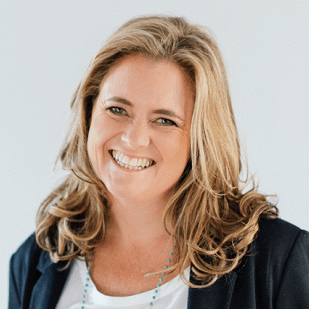
I am so excited for this conversation today. met Dennis, sorry, let start that again. I am so excited for this conversation today. I met Denise about a week and a half ago in Jersey Channel Islands. And we just had this incredible meeting of minds around, partly around a number of conversations from losing the village to return to work to the pressure on women and mothers nowadays. And so I really wanted to have her onto the podcast.
Denise, I’m super excited to have you here.
Denise (00:33.156)
Thank you. I’m really excited as well. I think we had a meeting originally booked in for about an hour, but we could have spent all day talking about this subject.
Meg (00:40.206)
Well, exactly, absolutely. I’ve been so interested just having a look at the organization that you founded and are working in, is called Mentorhood Jersey. And one of the things when I had a look at your information was that you talk about parenting being a hidden workforce. And I think that’s just such an insightful comment. And I’d love you to unpack it a little bit. And when you actually kind of first noticed this.
Denise (00:59.329)
I suppose my, predominantly my career has been working in businesses and hospitality and I had my age role during that period of time and when I returned back into the workplace I just found it incredibly difficult to settle in that period. I was so quite ambitious and I’d taken some time off at my daughter and I just find it really difficult to, I suppose from the employers
point of view I thought it was quite difficult to navigate back into that world, the working world. And a couple of years ago I got asked to sit on an Institute of Directors kind of event and it was about you know talent shortage on the island. I was heavily pregnant with my then second child and I had to really speak up and say like you’ve got this incredible pool of you know talent in parents, predominantly women, that return back into the workplace and we’re left quite stagnant in our career.
Meg (01:31.394)
Mm.
Denise (01:54.336)
And think that sometimes employers feel that, you we don’t have the same dedication, our mind is somewhere else. And when anybody with a mother knows that you are a master’s of multitasking and, all these new skills you’ve developed as a parent. So I think sometimes when we look at skills shortages, we don’t take into account all these women that have had fantastic careers. I’ve taken Step Out, rightly so, to look after, you know, their children and those most meaningful years of their life and their early years. But at some stage, they want to come back in and…
Meg (01:59.596)
Mm.
Denise (02:24.125)
really, really add impact back into the workplace. So we sometimes forget that that is what I mean by that phrase.
Meg (02:30.943)
Yeah, and you know, it’s quite interesting because I think that because of the way in which business is structured, that it says when you return, you return as the same person with the same terms at the same hours. When you take that, let’s say square hole and you try and put this round peg into it, who is now completely different, has a different skill set and also different demands and needs on their time and so on.
Denise (02:54.888)
minute.
Meg (02:57.325)
you’re actually really trying to put a square peg into a round hole or a round peg into a square hole. And actually it’s cutting out an enormous amount of women who otherwise would be an incredible asset if they did return to work and if they could. And one of the things I’ve noticed in my business, which is almost entirely women, we have 13 women out of 15 employees. And of those 13 women, 80 % are moms as well. And I can tell you that they are not the same person as they were before they had children.
Denise (03:18.219)
Yes. Yes.
Meg (03:27.137)
but I actually think they’re better. I think that they’re, you know, and I think that’s where people just aren’t recognizing it. They’re trying to fit them back into, you know, a woman with no children’s role and that’s just not who we are.
Denise (03:38.769)
Exactly, and I think that sometimes, like I came back and I was working in 92, but I knew within them hours I wasn’t procrastinating in the kitchen talking about my holidays. I knew that I had and I KPI’s, and I always said that, like we the specialist over in Jersey, looking at kind of how, you know, productive the workforce are in parents. I mean, we linked it back into, you know, them hours that they are flexible hours or reduced hours, but why they’re so important within a team because
These are the people that will get that work done to a high level. But if you design the job well and you have got KPIs for that role, if anybody, even if they are a parent or anyone in a care role, aren’t hitting them targets, you’re going to go through a disciplinary or HR procedure with them. You have to give the opportunity. And that’s where offering up these flexible roles or these roles that suit the skill sets of parents coming back in is so important.
Meg (04:15.778)
Mm.
Meg (04:24.749)
Yeah, absolutely. So, I mean, you recognize that and I think many of us and this will resonate with most of the women who listening to this conversation because either they’ve returned to work and they feel like they’re a square peg in a round hole or they’ve actually chosen to step out of the work environment because it was just too hard to make themselves fit what they perceived needed to be, you know, kind of what they needed to be. So you, having had a background in hospitality, decided that you wanted to actually do something about this. It wasn’t good enough to notice it.
So explain to me how you came to that decision that you’re gonna build something for parents and what has been your solution.
Denise (04:59.167)
Well I think because I had predominantly a career in hospitality, a career I loved and I worked qualifications to do pre-children and then at my eight-year-old I had to go through IVF so like I went through an eight-year journey to have my eight-year-old which was
really incredibly stressful and it wasn’t something that I could openly speak to my employer about. So a lot of my appointments were running to the hospital on lunch breaks or taking my trigger shots in the fridge beside me when I was between meetings or between service. So I didn’t have that open conversation with my employer. And it really made me sad that I had a good relationship with this person but I couldn’t have that conversation with them because I felt that I was getting to a stage where I was going to be offered a promotion, I was going to be offered shared in the business.
I was on very much a bonus scheme and I thought that I would be kind of pipped against other people and potentially wouldn’t be open to that because of my situation when trying to get pregnant. Which I’d like to say a lot of workplaces are much different now. That was like, you know, that was nine years ago, my eight year old, so I would have been going through the early stages of IVF at that stage. But incredibly stressful time. And I looked back at that period and I feel sad that I have to leave an industry I loved because when I came back into the industry, I wasn’t equipped.
Meg (06:01.517)
Mm.
Denise (06:08.729)
For someone like me, who was a mother, I wasn’t able to work the reduced hours. Sometimes I’d have to, my daughter would have to come in, I’d have to put her in the corner, give her colouring and some motion out of which she loved. And I would have to just like maybe work an extra hour. So I found it incredibly stressful. And then her dad would come and maybe do a handover. Because I still tried to at a senior level. And then I realised I can’t maintain this level of care I want to give my daughter and be at that level. So I have to take a step back, which I retrained and I did some qualifications in recruitment.
Meg (06:10.023)
Mm. Mm.
Meg (06:17.954)
Mm.
Denise (06:38.349)
And that’s where I saw just an influx of really credible people coming in that were predominantly mothers with really good skill sets, trying to get that open and back into a role. And that’s where I found it was a real struggle sometimes to get the employers to match these wonderfully talented women.
Meg (06:55.113)
Absolutely. And so what you’re building is a platform, a voice for these women to where you’re advocating back into business to say, you guys are missing a trick here. These guys are gold and we need to look at how we can accommodate women. Is that kind of what you’re building?
Denise (07:00.63)
Yes.
Denise (07:11.256)
Yeah, so the workshop, we predominantly do workshops. So we tried to do the workshops originally. So Mentorhood was set off predominantly to do workshops and it was for anyone in a care role. Mentorhood is a play on motherhood and manhood. So was anybody in a care role that was looking to return back into the workplace. So the first set of workshops we ran a year ago, we had 100 parents through them. And I took on the career guidance part where I sat with them, just said like, know, okay, I understand the family dynamic. You know, what kind of roles are you looking for? How can we support you into that role?
I went through CV writing, mock interviews, LinkedIn presence and then we had a confidence coach that worked with them because you know there’s obviously a lot of science out there about how women lose their confidence after having a child and we have imposter syndrome we’re trying to go for better paid roles or sometimes for asking for promotions or for more money so we have obviously a gender pay gap there as well. So we did a lot of work with a confidence coach, we had a lady who does tapping on the island for anxiety.
And if you don’t know much about tapping, I would certainly look it up. It really helped a lot of our people that were nervous before interviews going into basically be able to sit and ask the right questions and calm their nerves during the interviews. And we worked with two financial advisors on financial literacy and budgeting for your family when you’re returning back after the whole maternity pay, losing the maternity pay and trying to get a meaningful amount of money to help support your family as well. And whether it was the cost of childcare, whether it was worth you coming back as well.
Meg (08:18.349)
Hmm.
Denise (08:37.238)
So we did the holistic approach with the workshops and like I said, we had 100 parents through that and on the back of that, I can feed lot of it into me at recruitment because I work in a recruitment company. So we can obviously, I can match it with the employers. So on the other side of that, we worked with the Institute directors on enabling businesses to better understand what it means to be a family friendly employer. We had a UK specialist that came over, Jane Van Sael, who ran Working Families.
So she came over and ran the event and we spoke with PWC, HSBC, Applebee, quite a lot of companies over here. And she ran some workshops in relation to how to be a family-friendly employer rather than just have the tagline, but really how to train your line manager as an advocate to be a family-friendly employer. And then we tried to match some of them candidates into roles.
Meg (09:27.265)
It’s amazing. look, mean, I there’s probably at least two steps that are that in my mind are necessary. The one is advocacy and actually just changing opinion, because, you know, I think I’m only just really waking up to this conversation, even though I’ve always pre I’ve always acted on it. I’ve never really preached it because I mean, as I said, my staff has always had flexible working hours. They’ve always worked remote. They’ve always worked around their child lifts and their child care and their breastfeeds, because that’s just the way that we do it.
Denise (09:43.058)
Okay.
Denise (09:48.404)
Yeah.
Meg (09:56.12)
But I think what hasn’t been said in the past is if you don’t take these moms on, if you don’t make a place for them, you’re actually losing an absolutely golden opportunity. And so the first piece I think that needs to be done, which you’re obviously doing is the advocacy piece. And the second piece also in A is the architecture piece. And that’s that we can’t just plug into the old system, which is a nine to five with a one hour over lunch. A one hour over lunch is a pointless thing for a mother, her children at school at that time.
Denise (10:17.876)
I think you have the good and the bad and you know and I’m very resilient so I think that I’ve sat up
Meg (10:25.099)
I give her the flexibility to leave an hour earlier, whatever. So we need to architect something different. What was the response of the HR managers to you saying something like that, like advocacy and architecture?
Denise (10:43.091)
With my recruitment hat on, I’ve sat in lot of meetings as a mother, listened to the conversation of don’t send me anybody unless they can work nine to five. I need this, I need that, no hybrid working is allowed. And I’ve sat there and then conversations, you know, very, very probably junior to recruitment at that stage where now I have a bit more of a voice. I will say, look, are you open to me sending you over to CVs? Are you open to looking at job shares? Are you open to this? So I can very much advocate for that as somebody who works reduced hours. Like I’m the main person who does drop off and pick up for our children.
So I have to have reduced hours. I have to work through my lunch breaks to try and finish early to go and do a nursery pick up. And I know that I have to work through KPIs. I have a certain amount of placements I need to do a month. So I very much am about job design and I’m trying to get HR directors to look at job design and what is the expectation, what are the KPIs, and then work backwards from that rather than say this is the role, these are the hours, this is the salary.
very much looking at it from a job design point of view and I think with flexible working you know there needs to be an approach of saying okay well how do we get to you know let’s start with the mindset of yes and then maybe it will be no but let’s start at the mindset yes and how do we meet somewhere in the middle for a lot of these people that will have and it won’t just be parents you know in Jersey at the moment we’ve got an ageing population so we have a lot of people that will be you looking after children but looking after elderly parents or we’ll be maybe looking after an auntie or you know a brother or however that works so there are
Meg (12:01.486)
Mm-hmm.
Denise (12:06.69)
As much as we put it back to, I think, was set up for anyone in a caring role. Predominantly, we deal mostly with mothers, but I think anyone who is in a care role that needs just that bit of support to try and get a better role or to get back into the workplace will certainly support you.
Meg (12:13.198)
Mm.
Meg (12:18.008)
Mm.
Meg (12:22.169)
Yeah, you know, one of the things that has always frustrated me is that sometimes just as this conversation is happening, a CEO or a thought leader or somebody on a podcast will say, you know, and often it’s people who are and often men who are on podcasts, very high up in leadership of startups, as an example, I’ve heard them on, you know, all sorts of podcast recordings saying, we have now gone back to the office, like we we we’ve left COVID behind us, everybody has to work in the office now.
Denise (12:47.161)
Amen.
Meg (12:50.89)
That makes no sense to me. And I feel like there’s an agenda below that rigidity that’s the actual problem. so, you know, the rigidity is the symptom. you know, inside four walls, inside work hours, and your KPIs, and your whatever, whatever, your ceiling, your rates associated with your art, whatever. That’s the design, but it’s a symptom of something that’s underlying it, which I think is mistrust.
Denise (12:59.984)
and
Denise (13:18.532)
Yes.
Meg (13:18.574)
I don’t know if that’s kind of where your head goes, but do you think that there’s a misconception amongst employers that once somebody’s had kids, they just can’t deliver as they used to, or that you can’t trust them as much to deliver as they used to?
Denise (13:32.447)
I think some employers are like that until they have some good examples of parents that are people in a care role that are performing. So I think that is just potentially still the, you know, some of the employers I deal with, we have to really push hard and say, look, you know, I know your model is this, you know, this mom needs to be able to work from home two days because she’s got a young child and she needs to, got a child in school. So we have to advocate for this. So it is up to anybody, recruiters or anybody who are in this position that probably can advocate for these people. Cause I think
I’ve seen it where an employer that I was dealing with, an incredibly nice man, but his wife never worked, so he never really got an insight into this world of someone needs to be available to go and pick up a child or somebody needs to do that. And I think that sometimes it’s an education piece. Sometimes it’s sitting with them and explaining, well, this is the reality. If you were more involved at that stage, this is the reality of what dads are facing now. Dads want to be at the sports stairs.
Meg (14:28.419)
Mm.
Denise (14:30.606)
know, mums want to be able to have a meaningful job. You know, it’s not the 1950s model anymore where the mum stays at home and the dad goes out to work and one income can support that family. We’ve moved completely away from that. But unfortunately, the work and world and, you know, the school system hasn’t really moved away from that model. So we find that we get one or two candidates that go in there, really prove themselves. It can definitely pave the way for more because they see how it works. But sometimes you have to break that barrier for that business to see that and then they realise
Meg (14:53.389)
Yeah.
Meg (14:56.866)
Yeah.
Denise (14:59.582)
that really really does work okay well we’re happy to see more candidates that are similar to that style and then you can break that barrier but it is a slow process but it is happening.
Meg (15:04.352)
Yeah.
Meg (15:08.31)
And I love the fact that you brought fathers into this as well because somebody attended this incredible event that you were at recently, Tove, my partner attended it. And we’ve always been speaking about the motherhood penalty, but there’s a fatherhood, and there’s another word, what is that? The fatherhood, she told me about it after your event. And I was like, my gosh, that really makes sense that dads actually, there’s a loss for them as well, that they’re expected to not be able to be at the sports day because I don’t know, history said you’re the breadwinner.
Denise (15:23.323)
And.
Denise (15:32.033)
Yeah.
Meg (15:37.804)
And so there’s a loss for them as well. I’m gonna try and remember that word, but it was just so, when she said it to me, I was like, yes, that’s it. It’s not just women who losing. We’re losing the opportunity to return to work maybe, but dads are losing the opportunity that they should have to be engaged with their children’s lives.
Denise (15:37.911)
Yeah.
Denise (15:53.481)
Exactly, and think that’s one to be now. It’s very different with my parents and my dad was involved, but not to the extent my partner is. And I suppose there is an expectation for him to be involved because I work and I need him to. He’s got a great relationship with his daughter. It’s because of that as well. He’ll take every second Wednesday off with him. On our last child, we shared paternity leave. But the difference in the relationship, you look at how she’s got
Meg (16:00.878)
Mm.
Meg (16:10.326)
Yeah.
Denise (16:19.701)
that relationship with her dad and she’ll understand that. And as young girls growing up as well, I think that’s really, really important. And we’re really mindful of like how they see the shared care role in the household and how they see mommy going out to work. And I talked to them about my work and my career and they know it’s a big part of me, but I am a mom and that’s first and foremost, I am a mom and I love them very much. Well, I didn’t have that with my mom. My mom, I adored the grant she walked on. I’m one of nine, she brought up nine children and God love her. I always thought that my dad…
Meg (16:20.814)
Mm.
Yeah.
Meg (16:35.16)
Yeah.
Meg (16:40.524)
Yeah.
Meg (16:44.536)
Wow.
Denise (16:47.839)
had a hard job and then I realized my mum was a home with nine children. And just my perception of exactly, like, but my perception of kind of women in the workplace, I didn’t have that grown up. And I suppose that’s why I advocate very heavily for the work I do because I see these really incredible women, you know, just need the opportunity and that need that fulfillment for them as well, because you can be the most amazing mother, but if you get a career or a spark, even if it’s working in the charity sector, it’s something that sparks your energy.
Meg (16:51.896)
That’s a juggle. Yeah.
Meg (16:59.415)
Yeah.
Mm.
Denise (17:16.414)
That’s going to benefit your young son or your young daughter because they’re going to see, you know, this is Mummy’s kind of fulfillment. She’s got me and she loves me very much, but this is part of her fulfillment as well.
Meg (17:18.605)
Mm.
Meg (17:22.094)
Mm-hmm.
Meg (17:25.742)
Yeah, yeah, she’s more than that. It’s amazing. I think one of the things that, know, when I think about some of the losses that have that our generation of moms suffer much more than any other previous generation, one of the things that really comes to mind is the loss of the village. And that is that, you know, I think previously and I mean, I certainly had it where my mom was close enough where she would go and fetch the kids if I couldn’t make it. And so it allowed me a lot more flexibility at work. And of course, now, and particularly in a place like Jersey, which is where you are,
Denise (17:28.66)
Yeah.
Denise (17:40.744)
Yes.
Meg (17:55.491)
childcare is very expensive and a lot of people who are living here are expats. And so they’re far away from their support system. And so this loss of the village has further played into the lack of the ability to actually return to work because there’s nobody else to support you with raising the children. Previously, going back hundreds of years, if you were the person who was going to go and work in the rice paddies or wherever it was, there was a village who were taking care of your children. so you could actually hold other roles.
Denise (18:22.226)
Yeah.
Meg (18:24.526)
It wasn’t just you that was holding this one role. And so this village has been really lost and it has an enormous loss for women. So what does it look like day to day to start to rebuild a village? I know that that’s something that you talk about a lot in mentorhood.
Denise (18:42.566)
Yeah, think as well a big reason for setting it up was definitely to progress the workshops, when it was to create a network. I think with the feedback we’ve had from the first set of workshops from 100 parents was isolation. So that was a big thing for them. was like they haven’t really found their clan, they haven’t found their network, they haven’t found their village. And we tried to create like, you know, like meetups quite regularly. You know, I had a mum there yesterday who contacted me with a seven week old baby.
And in Jersey, we seem to close a lot of the clubs in the summer because people go on holiday. So she was connecting with me to ask, you know, do I know any clubs open and do I know any other parents with baby similar ages? So one message goes up in the group and you’ve got four mums are saying like, well, I’ve got a baby similar age. I’m happy to meet you at the park. I’m here every Wednesday and little things like that just create a bigger world for that mum. So her world is quite small with that baby and she’s not from here and she just moved here into a role and then she just trying to kind of find her feet.
Meg (19:12.014)
Mm.
Denise (19:37.798)
It’s little steps like that where it’s kind of like, you know, I meet here every Wednesday or I meet here every Monday. I’d be happy to like go for a walk and slowly you start to build connections, your children start to build connections. And we’re trying to do more of that where we just have regular meetups and, you know, we connect mums with children similar ages so that they can slowly start building it because unfortunately in Jersey, we are quite isolated. know, a lot of people don’t have grandparents or don’t have families here. So you do rely on that network to try and bring up your children.
Meg (19:37.869)
Mm.
Meg (19:45.037)
Mm.
Mm.
Meg (20:00.705)
Mm.
Denise (20:06.82)
and try and support you in bringing up your children and for you as well as an individual.
Meg (20:07.0)
Hmm.
Meg (20:10.956)
Yeah, you know, it’s so interesting. I was at a psychiatric conference just recently. I was lecturing to a group of psychiatrists and a woman came up to me afterwards and I don’t recall the word that she used. And again, I feel like I’m having terrible word finding issues, but both of them were new concepts to me. But she spoke about something where a woman takes care of another woman’s child and you kind of cover for each other. And there’s actually a term for it. And she was talking about the anthropological background to it and how it happened in generations gone by.
And I suddenly realized we don’t have that. We rely on nannies and nurses and caregivers, but actually we should be relying on each other. And we just don’t get to do that because this village has been so badly disrupted.
Denise (20:54.245)
No, I totally agree with that. suppose I talk a lot about it write a lot about it because of my own upbringing. And I always said that like my parents, we didn’t have, we didn’t live close to my granny. And, you know, even though my dad was one of nine, a lot of his brothers lived in England. So we didn’t really have that big connection, but we had a neighborhood where it was a hundred houses. And I remember I would like, you know, go to my friend’s house for dinner. You know, we lived very much on Hamidans, but it was very much that theory of like the African kind of fable of like you, you know, we brought up by, you know,
Meg (21:04.782)
Mm.
Meg (21:20.59)
Mmm. Mmm.
Denise (21:24.206)
by a hundred people in a village and it would be like you’ll have a hundred different meals, a hundred different homie dance and that was very much my childhood. And we weren’t rich with money, but we were rich with love and we were rich with people. And I think that, you my parents always had, you know, someone to keep an eye, keep an eye on us, someone to, you know, look out for us. And that, and my mum always had mum friends. I always remember her friends and they would sit and have a cup of tea together and probably have a good morn, but they, and children would play together. And I think we are missing that. And I think that.
Meg (21:28.504)
Mm.
Meg (21:34.018)
Mm.
Meg (21:39.374)
Mm.
Meg (21:47.486)
Mm. Yeah. Yeah.
Denise (21:52.471)
That really made me sad when we started Mentorhood and the feedback was isolation piece. I just thought, God, we have so many great community things that go on. We have so many great charities out part of futures that run breakfast clubs and run different events. But some people are just so in their shell to even step to get there. You know the mornings you’ve had with trying to get child ready. It’s just the first step to get there is such a big step for somebody. And I’d like to see it more accessible for people.
Meg (21:56.537)
Yeah, absolutely.
Meg (22:07.502)
Mm.
Meg (22:16.76)
Yeah.
Absolutely. I mean, when I think back to when we think about the historical and like your upbringing, you know, there was no system, there was no rules, there was no, you know, kind of, you know, canvassing of organizations, it just happened naturally, it was just it was just your village. We don’t have that now. So what you’ve done, which I think is completely amazing is that you’ve gone, okay, let’s have a look at all these different, let’s look at the system. And let’s look at all of these nodes within the system. So charities, schools, businesses, government, you’re actually bringing them all to the same table.
And I think it’s something that, I mean, I have to spend time in America and it’s certainly something that came up again and again in the conversations that were happening around dinner tables and conference tables is how do we actually galvanize systems to work together to support parents? What would your advice be to people who working in systems now? How do we actually get all the different stakeholders to actually agree on and come together?
Denise (23:02.242)
Okay.
Denise (23:12.61)
I think the first thing has to be that there has to be a common goal. So it has to be a common goal that, know, is it, you know, in Jersey we’re asking that an affordability task force is set up on how to understand what it takes to raise a child in Jersey. So affordability task force is set up and we’ve probably had quite a lot of buy-in from that, from the charity sector, from educators, from businesses that understand that there is a cost of living problem in Jersey and to bring a child up here is relatively expensive. We are losing quite a lot of people because of that.
Meg (23:16.526)
Mm.
Meg (23:36.451)
Mm.
Denise (23:42.303)
So we have asked, we’ve basically done a round table, tried to understand the issue from an education point of view, health, all these different points of view. And then we’ve asked them to, know, pen and a lesher what we’ve discussed to our government and asked our government to get involved. And that’s where we’re at. Like we’re at the beginning stages, but we’ve done it with advocacy for the funding. We noticed the early years childcare is expensive. So we’ve done that with the advocacy work we’ve done on the funding of two to three year olds.
Meg (23:42.637)
Mm.
Meg (23:57.165)
Mm.
Denise (24:11.444)
and now we have some funding in place, but that was very much getting the right people around the table through the Policy Centre and then feeding that into government and then look at how that can be a start to help and support parents and support parents back into the workplace as well. So I think it starts with them initial conversations and the buy-in, people need to be on the same page and it needs to be realistic and it needs to be evidenced and it needs to be researched as well.
Meg (24:17.643)
Mm.
Meg (24:29.422)
Mm.
Meg (24:35.424)
Yeah, absolutely. Wow, really incredible. I think we’re going to end off with something that’s more practical for our moms who are thinking about returning to work. many of our audience that listen to this podcast are moms who are sitting at home. A lot of these are pain points for them. They have been isolated. They’re feeling like they’ve lost their village, but they’ve also lost something else. They’ve lost the woman they were before and they’ve lost maybe some of their confidence. And she’s looking at this, listening to this conversation and she’s thinking, I don’t have a village.
I don’t have a support network. I’ve lost my confidence. I don’t know if I can add value back into my workspace. What is the first small step that you’d be encouraging her to take right now?
Denise (25:14.364)
I would say definitely the first year of raising a child is difficult. You’re very much, everyone would love another day in the week. It’s time pressures and you’re tired and you’re giving everything into just caring for this wonderful little person. I think it’s, I always say be kind to yourself and take it in small steps. And I think that even if you can look at parents sense of that wonderful up now, if you can look at what’s around me, maybe I can like…
you know, read something, look at what you enjoyed to do before you had that child, whether it was you enjoyed writing, know, whether you enjoyed kind of, you know, researching something, whether you enjoyed kind of like listening to a podcast like this. It’s them small steps to look at, you know, something that will give you enjoyment for you, not as a mother, but enjoyment for you. And then there’s bigger steps you can take about like, know, when you eventually want to get back into the workplace where a free online course or, you know, like, you know, sign up to something that is even if it’s like for me, it’s like.
I journal, you know, I’m a writer, so I journal and that’s a really good thing for me. But that just takes, that’s something for me. It’s not with my children, I love my children, but it’s something that I did before I had a child. I did a lot of writing and I think that’s something I can tip back into. But it took me time because I couldn’t do that when my children were very small. I kind of got back into it. My youngest is four now and I kind of got back into it. But I think definitely, you know, parents sense of create this incredible app. And I think there’s a lot of information on there and how you can, and how you can.
Meg (26:12.685)
Mm.
Meg (26:29.485)
Mm.
Denise (26:38.617)
the first formative years of a child’s life, how you can look for support. And I think that, you know, sometimes it is very hard getting out of that play group or, you know, signing up for that chorus or doing something for you because we feel, as women, we feel selfish, you know, that we’re not giving it to that little person. But if you find a little part of you that was there before you had that child that you will eventually go back to when that child gets a bit older, try and tap in a little bit to that, even if it’s for five minutes a week, even if it’s for half an hour a week, wherever you get that time.
Meg (26:42.317)
Yeah.
Meg (26:51.65)
Yeah.
Meg (26:58.69)
Yeah.
Meg (27:03.736)
Mm.
Denise (27:08.157)
Definitely try and do that for you. It’s so important. You have to your own cup, don’t you, before you look after that little test then.
Meg (27:13.3)
Absolutely, absolutely, completely aligned. And you know, I mean, another piece of advice that I would also have for moms, and I certainly did it myself and almost every one of my staff members, the women who work for me have done it this way. When they needed to go back for financial reasons or just wanted to go back for personal reasons because they needed some affirmation and just personal, just time away from their little one and just, you know, some external validation. What almost all of them started to do was build something either for themselves
or do something in the gig economy or in the consulting or kind of fractional space. And what that does is that it gets you out there, gets you knowing someone, you build up some confidence. So for me, I started a private practice and I wrote a book. All of that done obviously around my children’s schedules. Mad, she’s joined us recently for marketing, started up her own podcast and her own business so that she could actually do things on her terms. And then suddenly,
Denise (27:44.635)
Man.
Meg (28:11.136)
one of the clients, one of the people she’s gonna interview to be on the podcast says, hold on, you’ve got something of real value, come and join our team. you know, so I think almost putting yourself out there, even if it’s in the gig economy, so something on Fiverr or wherever it is, and doing something part-time for a while builds up your confidence. And before you know it, somebody who you’re working for, who’s noticing you will say, actually, there’s value and I will be fully flexible as long as I can have a piece of your flesh. And that’s exactly what I’ve done with the women around me. They’re all…
Denise (28:20.568)
Yeah. Yeah.
Meg (28:38.968)
came to me via a gig or a part-time or, you know, and that’s, that I think they came with confidence then because they’d come on their own terms.
Denise (28:47.386)
That’s pretty powerful. think it’s needed like people employers like you that really have that view of life. These are incredible people and I can build this massive project because I’ve got these wonderful people that maybe need flexibility, that maybe need to go to a sports day or do that. But what you get back in return is incredible. And that’s the message I always have to employers. Like if you look after a working parent, they will give a bat you in bucket loads. know, they’ll log on when children are down. They will, you know, they’ll
Meg (28:58.286)
Mm.
Meg (29:10.798)
market loads.
Denise (29:13.731)
They’ll come in for if somebody’s off sick and they’ve got childcare, they’ll come and support you. But you have loyalty and you will have you look at staff retention. And I always say to employers that hire a rocket parent and they will stay with you a long time and they will be loyal. They’ll support you and they’ll support you through all the things of your child’s life. They’ll support you through that as well. So it’s really important.
Meg (29:34.658)
Yeah, it really is. Well, it’s been wonderful chatting to you. I think the work you’re doing is just so absolutely unbelievably critical and it’s so topical. Like I can just see LinkedIn, it’s all over my feed at the moment. Like we’re not trying to get, we’re not just trying to get people back to work. We can try to redesign the reentry so that it works for everybody and it can work for business and it can work for women. And we must talk about it.
Denise (29:42.008)
Thank you.
Denise (29:58.104)
Definitely, I think it’s more we need to get more dads talking about us. That’s a really and I think when we did the IIT Institute directories event, I think it was very much we had a dad on the panel who was an investment manager who had gone through the stage of like being a junior member of staff and leading a team and we thought it was important that he talks a lot about it on LinkedIn as well, but we need to get more dads talking about it too. So it’s not just seen as a woman’s video.
Meg (30:01.198)
Mm.
Meg (30:08.078)
Mm.
Meg (30:15.086)
Yeah. Exactly. And the word has come back to me, it’s fatherhood forfeit because they’re forfeiting what is their right and they should be able to be involved with their children. So motherhood penalty, fatherhood forfeit, we need to redesign the work world. So thank you so much, Denise.
Denise (30:23.916)
Yes, exactly.
Denise (30:32.312)
Yes. Exactly. No, you’re very welcome. Thank you. It’s been a pleasure. Thank you. Take care. Okay.
Meg (30:38.219)
Wonderful. Thank you. Just don’t go off. Just give us two seconds. Madge.

 Article