Speaker 2] (0:00 – 2:30)
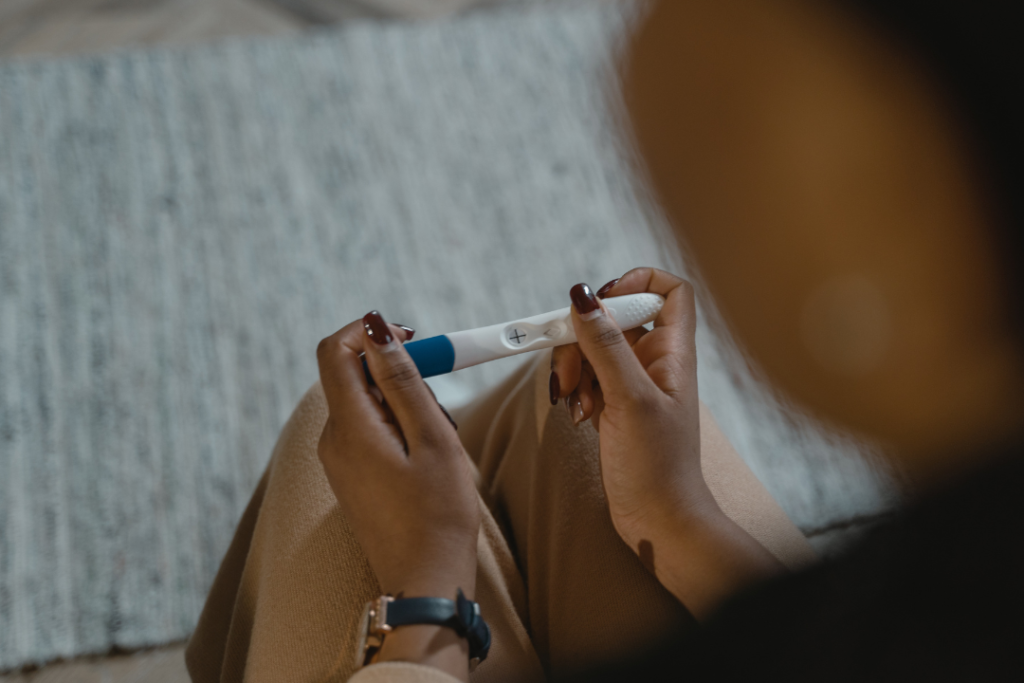
You’re pregnant, you’ve survived the first trimester and now someone tells you that the second trimester is the easy part. But is it? I’m Meg Forer and in this second episode in our real time pregnancy series with Dr Nellie Balfour, a paediatrician navigating her own second pregnancy from the inside, we are going to unpack all of the answers to these questions.
Last time Nellie shared her first trimester experience with us including perinatal depression and even hospitalisation due to nausea and vomiting. Now she’s 32 weeks in and the second trimester has been a very different story. So this is what we’re going to get into today.
The first thing is why the second trimester really does feel like a totally different pregnancy and what to do when yours doesn’t follow the textbook timeline. Secondly, we talk about baby kicks, what’s normal, what should you send to your doctor and a simple trick to get your little quiet baby moving. Thirdly, we have a look at the truth about alcohol and teratogens which are poisons for the developing brain and all the foods that you’ve been told to avoid.
So we look at what actually matters and what really doesn’t. And then fourthly, we talk about vaccinations in pregnancy which was fascinating, actually new information for me and she talks about which vaccines protect your newborn even before they’re born. So which vaccines should you actually be having and why this is one conversation that every pregnant woman really should be having with her doctor.
So this is real pregnancy, there’s no filter and no fear-mongering, just honest insight from a paediatrician who’s living through her second pregnancy. And so with that, let’s get on and let’s get into it with Nellie Balfour. Welcome to Sense by Meg Fora, where we make sense of the science and art of parenting.
Parenting is grey, gritty and beautiful all at once and my life’s work as a healthcare professional is helping parents feel more confident in a season that can feel really overwhelming. In each episode, we share honest conversations with real mums, dive into the science with experts and simply make sense of it all in practical ways. This is your space, you’re not alone, you’re held.
So let’s unpack the journey of a lifetime with Sense. Welcome back, Nellie. It is so lovely to have you join us again.
[Speaker 1] (2:30 – 2:34)
Thank you so much for having me, Meg. This is absolutely wonderful. I love doing these sessions with you.
[Speaker 2] (2:35 – 3:02)
Yeah, they’re absolutely amazing. And we’re going to be documenting the growth of your baby all the way through from first trimester all the way through to at least one year of age. So it’s going to be a wonderful journey for all the mums to follow you on.
And how many weeks are you now? So I am 32 weeks today. Amazing.
So you have just really passed through your second trimester. And in our last episode with you, we talked about your first trimester. So tell us how your second trimester transpired.
[Speaker 1] (3:02 – 4:04)
So the second trimester is always the best for me. I mean, I think a lot of mums can attest to this. It is amazing.
You get your energy back. You feel better, you get your appetite back, you’re eating better. You know, you can move around a little bit better.
You have a cute bump that’s showing now that you can kind of show off to people that everyone can like, kind of adore and look at. So for me, as I mentioned in our previous podcast, I generally tend to have the nausea with or without vomiting until about like 20 weeks. So for me, this time it got better at 22 weeks.
And then ever since then, it’s just been smooth sailing. Like I’ve gotten these bouts of energy. So I’m able to play with my two year old son more.
We take walks together. And then it’s just great to be able to eat again because I love food. So getting my appetite again is just amazing.
So I’m super, super happy. And it’s my favourite trimester.
[Speaker 2] (4:04 – 4:27)
It is. It’s so wonderful. And if you, I mean, if you were nauseous all the way through to 22 weeks, that’s fairly unusual.
Most people, certainly I, with my three babies had passed almost on the dot of 12 weeks. Most people’s hormones have settled by 12 weeks. So what was it like?
Did you actually find that you didn’t put on a lot of weight or, you know, did it affect your weight It did, um, for both pregnancies.
[Speaker 1] (4:27 – 6:13)
So a lot of the time, um, pregnancy nausea and hyperemesis gravidarum, which is, you know, the extreme form where someone gets dehydrated because they can’t even keep fluids down. And it’s excessive vomiting and nausea throughout the pregnancy. Most of the time it is hereditary.
So it’s something that moms usually pass on to their daughters when they get pregnant. So, um, speaking to my mom, it was pretty much the same for her in her pregnancies, particularly the last two of the four that she had. So for me and my first pregnancy, it was until 20 weeks and then 22 weeks in this pregnancy.
And it is brutal. So as I said, I love food. I’m a foodie.
Uh, you can find me at every new restaurant there is. Um, so I also feel like food is a very social thing or eating rather is a very social thing. It brings people together, you know, you can hang out and have meals and it makes people bond.
So it was really, really difficult not being able to eat. And as a result of that in both pregnancies, I ended up losing a lot of weight in the first trimester and then halfway through the second trimester, um, or even a few weeks into the second trimester, that’s when I start eating properly. And I wouldn’t particularly gain weight.
I would just go back to my usual weight. So that’s what seems to be happening now also. Um, and yeah, I mean, I get complimented a lot, like, oh, wow, you know, you carry so well and what diet are you on?
And what are you eating? And I just tell people all the time, it’s the first trimester, um, and a little bit into the second trimester that makes me lose weight and this is just how it is.
[Speaker 2] (6:13 – 6:31)
Yeah. And Nelly as a paediatrician, are there concerns for mums in terms of nutritional status? Because obviously, you know, you really do want to be, you’re giving your baby this kind of lifelong basis for health, um, through your nutrition in pregnancy.
Are there concerns for mums who are not gaining weight and who actually have lost weight?
[Speaker 1] (6:31 – 7:58)
So there are, and I think the main concern is dehydration more than anything. Um, I think a lot of mums get very worried about not eating properly in pregnancy, but they’ll find that babies are very resilient or foetuses are very resilient. Um, and they end up taking a lot of the nutrients that mum already has stored in her body.
And then that’s why mum ends up getting affected. So dehydration is the one thing though, that we usually don’t want to run into because it carries other problems. Um, it can cause preterm labour.
Um, it can also cause a growth restriction in the baby. So, I mean, I know a lot of mums, um, will say things like, I took my antinatal vitamins, but then they made me sick. So I was advised to maybe switch to a different one, but I’m scared when my baby get all the nutrients.
We’re getting a lot of the nutrients from food and stores in our body already. Um, so for me, in both pregnancies, as I said, um, I had this nausea that persisted in both pregnancies. I was admitted to hospital, um, with very mild dehydration and electrolyte imbalances.
Um, and my son in my first pregnancy was born absolutely healthy, 3.5 big bouncy baby boy. Um, and in this pregnancy too, my little one’s growing well. So our bodies are miraculous.
They are. And foetuses are very, very resilient.
[Speaker 2] (7:58 – 8:28)
Yeah, that’s really amazing. Well, of course, what they’re not resilient to are things like teratogens in pregnancy. And I’d love to just have your thoughts on that.
So moms, the word teratogen means really a toxin to the developing brain or the developing foetus. Um, and they include things like alcohol. Um, I think nicotine, cocaine, uh, um, teratogens that we think of, could you tell us a little bit about the kind of things that you’ve really made sure you avoided in pregnancy because they could be harmful to your baby?
[Speaker 1] (8:28 – 10:49)
Yeah. So I think the usual things that people speak about, which you’ve touched on, um, definitely alcohol, absolute, no, no, uh, foetal alcohol spectrum disorder, which we call it now and no longer syndrome, um, is something that, you know, is, is very prevalent in South Africa. We have the highest rates in the world.
Um, and I did a little insert on this, on a news channel last year. So, um, alcohol is an absolute no, no, because there’s no proven amount that you can take that is considered safe. Um, especially the earlier on in the pregnancy, um, uh, recreational drugs, which I don’t take, but a lot of people should stay away from those too, because they can be teratogenic.
And then I just know from other moms, when it comes to certain things that you can and cannot eat. So I know that people get advised a lot from, um, uh, you know, the pregnancy apps, other pregnant people, blogs to stay away from things such as processed meats, um, sushi, for example. Um, what else is there?
There’s a few things. So I wouldn’t particularly say they’re teratogenic, but the reason why it’s advised to stay away from them is because, you know, we’re not too sure about the different bacteria that they carry considering they aren’t cooked properly, or they’re not cooked at all like sushi. Um, so just to be on the safe side, it’s advised to stay away from those.
Although I have spoken to a lot of gynaecologists who advise that, you know, within moderation is fine. And as long as it’s from a reputable restaurant or food place, then that’s also fine. Um, but yeah, cigarette smoke is another one that people should stay away from.
I’m not a smoker myself, but cigarettes, um, not even secondhand smoke, thirdhand smoke even. So in the case of me being pregnant and I live with someone who smokes, that can also be detrimental to the growth of my baby because it can cause growth restriction to, um, as well as preterm labour. So yeah, um, the, the main things are alcohol, drugs, and nicotine that are teratogenic, um, certain medications also.
That’s why it’s important to always ask your doctor if you can take certain medications in pregnancy, um, and then just staying away from unsafe food sources.
[Speaker 2] (10:50 – 12:38)
Yeah. And, you know, I just want to just, um, stress the alcohol piece. You know, we, when I wrote Pregnancy Sense, we had a very long debate about whether or not we were going to put in to avoid alcohol completely.
And one of the three authors, I always coauthor books, and one of the three authors felt that we shouldn’t be too, um, kind of restrictive on it and just said, you know, in moderation type thing. And I, as an OT couldn’t put that into the book, I had to put in that it was a complete abstinence. And the reason for that, and I really did abstain when I say abstain completely, I think I had one sip of champagne on New Year’s Eve with my first pregnancy, and that was it for the whole nine months.
And I was really very anal about it. And, you know, I think moms, if you, if you’re listening to this and you’re just thinking about it, you know, nine months is a very short period of time to lay down a foundation for the rest of life. It is, it is the shortest window.
It feels long while you’re in it, but it’s the shortest window. And alcohol actually is something that adds no value to anybody’s life ever anyway. I mean, I do drink and I love a glass of wine, but the reality is that I do it because it’s social and you know, it helps me connect with the people who are with me at a dinner table type thing rather than actually, you know, that it has any other benefit.
So it really doesn’t have a benefit. And just to your point, Nelly, we don’t know how little will actually make an effect. And I think there is some evidence that shows that some brains, some developing brains are very robust and resilient and can deal with actually even binge sessions.
But some brains, the one sip is to actually give these foetal alcohol effects, which are not as extreme as all of the facial features and brain damage necessarily, but simple things like ADHD and ADD have been linked to it as well. So, you know, it’s a very short window moms. And, you know, I really, I’m Nelly, you and I are completely, it seems aligned on this, that alcohol is just a no-no in pregnancy.
[Speaker 1] (12:38 – 12:54)
Yeah, it’s an absolute no. I agree with everything you’ve said. And ethically, there is no way to conduct studies to look at what amount of alcohol would affect a foetus.
Therefore, we don’t know. Therefore, I just say, and you say, and most people say, just abstain because it’s the safest, it’s the safest way.
[Speaker 2] (12:54 – 13:09)
Absolutely. Yeah. Super interesting.
So what have been, I mean, obviously you’ve told us about the wins of this pregnancy that you’ve now started to be able to eat socially again, hold down food, stop with the nausea. You’ve got your beautiful energy coming. Have there been any things in the second trimester that have been challenges?
[Speaker 1] (13:09 – 14:00)
Um, not particularly. I think, I mean, I mentioned before that usually the nausea and the vomiting for me stops at 20 or 22 weeks. And I think that’s the only challenge I really faced.
Second trimester is literally like the honeymoon period for me. It’s absolutely amazing. It’s wonderful.
I think just feeling your baby kick gives you all the reassurance that you need. Um, you know, when those moments, uh, when you’re lying on a bed or lying on your side and you feel the baby kick and you’re like, okay, there you are. Everything’s all good.
Um, I think those are just the best moments. I haven’t had any down moments or negative experiences in my second trimester this time, or even last time. Uh, it’s just, it’s bliss for me.
[Speaker 2] (14:00 – 14:15)
Yeah. Oh, that’s so wonderful. So I’d love, I love the fact that you brought up kicking, cause that was actually going to be something I was going to ask you about.
With your babies, when do you actually start to feel them kick first? And does it make a difference for the fact that you actually didn’t put on a lot of weight? Does that mean you feel them earlier or later or is that irrelevant?
[Speaker 1] (14:15 – 15:15)
So I’ll tell you something interesting. Um, my first pregnancy, I felt my son kick at 18, 19 weeks and then this pregnancy at 16 weeks. So much sooner.
Um, and studies have actually shown that in subsequent pregnancies, you feel the kicking, um, sooner rather than later. Um, but what’s really interesting in this pregnancy too, is that my placenta is very posterior. So it’s, I’d say it’s like pointing towards the back.
Um, so when my baby kicks, um, basically baby’s kicking just against the uterus and I can feel everything compared to the first time where my placenta was more towards the front. It was nice and high, but more towards the front. So it provided that kind of cushioning when my son kicked.
So I wouldn’t feel the kicks as hard as I do now. So that’s super, super interesting. But, um, generally the kicking sensation, you begin to feel it at about 16 to 20 weeks.
[Speaker 2] (15:15 – 15:45)
Yeah, really, really interesting. Yeah. I can remember with my firstborn, I kept thinking that I was going to pass gas.
Like there was like these rumblings in my tummy that I was like, what is that? What is that? And then eventually I realised, okay, hold on.
Those are his flutters, his movements. And then of course, with my second pregnancy, as soon as they started at 16, 17 weeks, and then you, okay, this is her moving. Um, when, when, when she started to move, but that’s amazing.
And do you monitor your, your kicks and your movements and should moms in their second to third trimester start to actually monitor how frequently their baby is moving?
[Speaker 1] (15:46 – 16:30)
So one should monitor the kicks, um, and the movements. And apparently they need to be about, and I stand corrected about 10 kicks in an hour. Um, and then that’s how you know that everything is fine.
And if you can’t feel baby kicking, or if you’re concerned, baby hasn’t kicked in an hour, then it’s advised to eat something super sweet, um, or to lie on your side on your left side. And then you usually will feel the baby kicking then. Um, for me, I personally don’t monitor because both of my babies were quite active.
So they keep reminding me that they are there. Um, so I never forget that they’re there. Um, so I don’t particularly monitor because, you know, they keep being like, hi, mom, everything’s all good.
[Speaker 2] (16:31 – 16:31)
That’s incredible.
[Speaker 1] (16:32 – 16:32)
Yeah.
[Speaker 2] (16:32 – 17:04)
And then the big question, um, tests and scans and, um, you know, blood tests, all your triple tests or your quadruple tests. Now, can you just talk us through the tests that happen in the second trimester? Today’s dose of sense is brought to you by ParentSense, the expert based parenting app that gives you daily support from pregnancy to sleep feeding and daily routines.
Take the guesswork out of parenting, download ParentSense today and use the code SENSE50 for 50% off. Can you just talk us through the tests that happen in the second trimester?
[Speaker 1] (17:04 – 18:27)
Yeah, it also depends on your age. So, um, there’s a test actually, which a lot of guineas are doing in the first trimester now with advanced maternal age moms. So that’s someone like me, who’s above 35 years of age.
Um, it’s called the NIPT or non-invasive prenatal testing. And that’s usually done between 10 and 12 weeks. And that basically is the test just to, um, you know, determine whether the baby has any chromosomal abnormalities.
And it also gives you the gender of the baby. Um, if you are a mom who’s below 35 weeks, they wouldn’t offer that to you. Instead they would do tests in the second trimester.
Um, so those are tests like the, uh, quadruple test and the triple test where they test for things like Down syndrome, um, gastroschisis, which is a condition in which the baby’s intestines are sometimes, um, outside of the actual abdominal cavity when they’re born. Um, there’s trisomy 18, trisomy 13. Also, um, we also find out the gender at 20 weeks in a, in a normal pregnancy on the ultrasound.
Um, so there’s quite a few tests that come in the second trimester, um, just for, you know, low risk, straightforward pregnancies. Um, yeah. And then, as I said, the advanced maternal age moms will usually get those tests a little bit earlier on.
[Speaker 2] (18:27 – 18:37)
Yeah. And those tests are made up of blood and scans predominantly, um, and not amniocentesis unless there’s an issue, right?
[Speaker 1] (18:37 – 19:34)
Yes. So it’s blood and scans usually. Um, and then if there’s any concern with the scan and all the bloods, then they’ll escalate it and an amniocentesis will be done in which they put a needle basically into the amniotic fluid and sample it just to make sure that the chromosomes and DNA are completely fine.
Yeah. But that’s only in certain cases and not in every case. And you didn’t, never needed to have an amnio with either of your babies?
No, I didn’t need to have an amnio. Luckily my NIPTs in the first trimester for both pregnancies were fine and were normal. And then the nuchal translucency, which basically is a test in which we just look at the back of the baby’s neck, um, and see how thick the skin is.
Usually in Down syndrome, the skin is thicker than usual. Um, and then if there is any concern about, you know, it being thicker than they’ll do further tests and maybe an amniocentesis. Um, but no, I didn’t need any of those.
[Speaker 2] (19:34 – 19:58)
That’s amazing. Okay. Well, that’s really, really good news.
Um, and I want to turn my attention a little bit to your partner who is very involved with your babies. Um, I have, I have seen that on Instagram. It’s amazing.
Can you tell us a little bit about, um, for mums who have got partners who alongside them, and we recognise that this is not everybody, everybody’s journey, but what type of things do you think partners could be doing at this stage in pregnancy? And what does support look like?
[Speaker 1] (19:58 – 21:32)
So support for me looks like, um, being present throughout the pregnancy, because I know that there are some people who struggle with their partners, not particularly being present. And this is not physically present. This is also just emotionally and psychologically present also.
Um, so being interested in what’s happening in the pregnancy, asking questions, attending gynae visits together and the scans together, um, you know, constantly checking in with mom, how’s she feeling? Does she need anything? Especially in that dreaded first trimester when you’re super sick, um, just being a shoulder to lean on.
Um, that’s my definition of being present and just showing support in a pregnancy. Um, you know, trying to alleviate any anxiety that she has, any fears that she has, trying not to add additional stress because pregnancy is stressful. Um, and you do have anxiety around the growing baby, you know?
Um, yeah, I would say that’s what it looks like to me. My husband is very, very supportive. Um, he’s always wanted to be a dad.
So he was super excited when we found out we were pregnant both times, like equally excited. Um, and he loves coming to the gynae visits because he calls it visiting our baby. So he always says we’re going to go visit him and see him.
So he gets super excited for those appointments and he takes a hundred pictures and wants copies of the, the ultrasound and all of that. And yeah, he’s just, he’s very supportive. Um, and I’m very blessed to have him.
[Speaker 2] (21:33 – 21:58)
Yeah. Amazing. Really, really amazing.
You’ve also mentioned when you and I were just chatting before we started and people might be able to hear in your voice that you’re a little bit croaky, that you have ended up catching flu from your toddler, which of course is exactly what happens. Um, are there any concerns when you have an older baby, um, you know, kind of who’s in the home? Do you, are there concerns around mommy’s mom’s health and what they should and shouldn’t be catching and just what to avoid and what to do?
[Speaker 1] (21:58 – 23:52)
There are concerns and it’s difficult when you have a child who’s going to school or has just started school. I mean, that’s even worse because they bring home every single bug in the first couple of months. Um, I think every mom will encounter some kind of respiratory virus if they have a little one who goes to preschool and they’re pregnant.
Now, respiratory viruses aren’t particularly dangerous in pregnancy, but they can complicate, sorry. So it’s advised that when one does get any kind of respiratory tract infection in pregnancy, they need to stay hydrated. Firstly, they need to keep their fever down because having a fever can actually, um, tip you into preterm labour.
So monitoring the fever and keeping it down and then taking the medications that are safe to take in pregnancy, which is paracetamol and vitamin C basically. Um, and then there are the dangerous viruses that one can get, um, which is what we call TORCH. It’s an acronym that stands for the different bugs like toxoplasmosis, rubella, which is also known as German measles, um, cytomegalovirus and herpes and syphilis.
So those ones can be super, super detrimental to the developing foetus and can actually cause long-term effects, um, that continue later on in life. And some babies don’t even end up surviving, um, shortly after birth. So usually when one is pregnant, the gynaecologist will do tests like testing mom to see how many antibodies she has against measles, against rubella, just to make sure that she’s covered.
Um, because you know, one needs to be really, really safe, particularly if they, if they have a child who goes to school and can bring rubella and measles and all of these things back home to them.
[Speaker 2] (23:52 – 24:19)
Yeah. So that’s really interesting. Um, when you made that list, you talked about that list, there were kind of, in my head, three buckets there.
The one are diseases that are avoidable with certain strategies. The other one is, um, ones that you can be vaccinated against. And the third is that you need to actually a test for beforehand.
So could you just break those each into each of those buckets? You know, what can you not vaccinate or you just need to avoid? Um, and then what, what do you need to vaccinate for?
And then, you know, what other tests should you be having?
[Speaker 1] (24:19 – 25:34)
Okay. That’s a great question because there’s more and more, um, research that’s being done in, uh, you know, in the world now when it comes to that. And South Africa is actually ahead of the game when it comes to vaccinating pregnant women.
Um, so when it comes to those that they do tests for, it’s the rubella, which is German measles. Some people call it German measles. Um, and it’s measles itself.
So those are the ones that we generally test. We also test for, you know, HIV. I mean, you don’t get HIV from you touching a little one or being around a little one, but they generally test for that too.
The ones that we get vaccinated against now, and which is now on the recent guidelines and advised, um, are RSV, which is respiratory syncytial virus. So RSV can be really, really dangerous for newborn babies, um, whether they are prim or term. We’ve seen that they can end up in ICU.
It’s basically a very bad respiratory tract infection. They get, um, little phlegm plugs or mucus plugs in their lungs, which then, you know, um, interferes with their breathing and, and they can end up being super, super sick. So RSV is something that we vaccinate pregnant women against now so that she can pass the antibodies on passively to her, her little one.
[Speaker 2] (25:34 – 25:39)
And sorry to interrupt you. Could she be vaccinated in pregnancy for RSV if she hasn’t been vaccinated before? Yes.
Yeah.
[Speaker 1] (25:40 – 27:00)
So that’s, those are the new guidelines. So if she’s never been vaccinated before, which we generally don’t tend to vaccinate against as adults, um, yes, we vaccinate now in pregnancy. So pregnant women are the priority to vaccinate as well as vaccinating the newborns if the mom wasn’t vaccinated in pregnancy.
So there’s RSV, there’s pertussis or whooping cough, as it’s commonly known. That’s another one we vaccinate pregnant women against because as we also know, pertussis can be quite bad and kids end up in hospital acquiring oxygen and then flu, influenza A. Yeah.
So then the flu vaccine. So it’s advised that all pregnant women, uh, get vaccinated with the flu vaccine so that it also protects little ones because we’ve seen, particularly with influenza A in newborns and children, it can be quite serious, um, and concerning if they do get it. So those are the three that we generally tend to promote as paediatricians to vaccinate pregnant women with, or vaccinate the babies with once they come out.
Um, RSV can be done in the newborn period. Um, pertussis is usually done, I think by six or 10 weeks and then, um, the flu virus can be, sorry, flu vaccine can be done after six months of age. So those are the ones.
[Speaker 2] (27:00 – 27:14)
Okay. It’s very, very interesting. And then of course, in the bucket of, um, diseases to avoid in pregnancy, toxoplasmosis came up and I’m sure most people have never heard of this before.
Um, and of course that is, um, comes from, um, cat faeces, am I correct?
[Speaker 1] (27:14 – 27:39)
So change. Yes. So cat faeces.
Um, a lot of people don’t hear about this because I guess not everyone has cats and it’s not as common. We don’t see it as commonly when it comes to the, um, neonatal infections, but yes, you get it from cat faeces. Um, and it’s usually when people change the cat litter, um, and then pregnant women are more susceptible to getting it than the average non-pregnant person.
[Speaker 2] (27:39 – 28:21)
Yeah. And it really does have very serious outcomes for babies developing brains. So moms, if you are listening and you have a kitty cat, please don’t change the cat litter.
That can be dad’s supportive role for the next nine months. And then he must wash his hands. Yes.
Exactly. Exactly. Yeah.
Well, it’s just been absolutely incredible to connect with you again, Nelly. We are out of time, sadly. I know normally we leave time for you to ask me a question, but we have run out of time today.
Um, but it’s been really amazing catching up with you. And of course you’re into your third trimester and we’ll be catching up again in a couple of weeks to find out how that goes. And yeah, I just hope you get better soon.
I know that it’s absolutely awful getting a cold in the middle of pregnancy or getting flu or RSV is just horrible. So yeah, hope you’re better quickly.
[Speaker 1] (28:21 – 28:24)
Thank you so much, Meg. I really enjoyed this and I’ll see you next time.
[Speaker 2] (28:24 – 28:53)
Thank you for joining me today. I hope today’s conversation brought you a little more clarity, calm and confidence on your parenting journey. If you enjoyed the episode, please do share it with a friend who needs to hear it today and also go and subscribe to the podcast.
So you never miss out on an episode. I’ll be back next week with another episode, same time, same place and always here to support you. And in the meantime, download the ParentSense app to take the guesswork out of feeding, sleep, weaning, routines and everything in between.

 Podcast