Meg (00:06.296)
Yeah.
Meg (00:12.28)
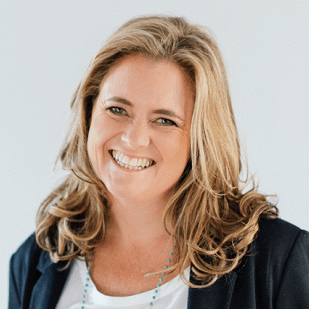
All right, we’re ready to start. Good. Go. Excellent. right, welcome back everybody. I am delighted. This is one of our sessions that we have with our regular guests. And our regular guest today is Dr. Nellie Balfour. Welcome, Nellie.
Nellie (00:28.002)
Thank you so much, Meg. I love being here.
Meg (00:30.924)
It’s always wonderful to have you. So for our new listeners, we have always tracked a new mom through ever since 2020. And that was back in lockdown. We tracked Cassidy and her little boy Max, and subsequently it tracked five moms, one a year, each year ever since. And last year, when I was in Abu Dhabi, I was introduced to Dr. Nellie Balfour. She was a p she is a pediatrician and was working at the time in Abu Dhabi. And it was just wonderful because.
The minute we met, there was just such a rapport. We knew we were on the same page with regards to parenting advice. And so I asked her, because she was just pregnant with her second, whether or not we could track her pregnancy and her baby’s first year. And she accepted. And I knew it would be an interesting perspective because Nellie is a seasoned mom of one. She is a pediatrician and was embarking on parenthood for the second time. And so I knew it would be interesting, and it has been super interesting, Nellie.
to have tracked your journey all the way through pregnancy. So thank you for joining us again.
Nellie (01:29.016)
Thank you so much for having me, Meg.
Meg (01:31.64)
So little Uli Uyakile is now three months old. I cannot believe it. Tell me about how things are going.
Nellie (01:40.43)
Time flies. He’s growing really well. He’s such a treat, actually. He’s very different from my experience with his brother. Maybe because I was a first time mom at that time, and now I have a little bit more experience. But it’s good to see a little bit of a personality coming out. It’s nice to see how he’s reaching the milestones he’s supposed to reach. He’s growing beautifully, as I’ve said. He’s breastfeeding.
better and more than his brother did. he’s also formula feeding, so I’m combo feeding. and he’s just such a treat and a delight. He started smiling and that’s brought us just so much joy here at home.
Meg (02:22.698)
Lovely. Well, there’s so much meat in just the stuff you’ve said so far. So I think let’s kick off with combo feeding because there are a lot of moms who do combo feed for multitude of reasons. and so you are doing both both breast and bottle. Are you doing express breast milk and bottle or you’re using formulas? And can you talk a little bit about how you’re managing combo feeding and also how you picked your formula?
Nellie (02:47.7)
so I’m doing both breast and bottle. Bottle is mainly formula, sometimes my breast milk. I typically start by breastfeeding him whenever he has a feed, after which it’s followed by a formula feed. So with him, basically he latches beautifully, better than his brother did. His brother preferred the bottle over the breast. and then afterwards, you know, got used to only the bottle and didn’t want the breast. But
Well is quite different. in terms of when I’m not with him and he’s been taken care of by his grand or my husband, that’s when I express breast milk. And then he also has some formula. The formula, the way I chose it was at first I wanted a formula that I know has the the closest resemblance to breast milk. So it has what we call human milk oligosaccharides.
And it has the most human milk oligosaccharides or HMOs in that formula. after which I moved him onto an anti-reflux formula because just like his brother, he has quite significant reflux. so right now he’s on an anti-reflux formula and my breast
Meg (04:02.154)
Excellent. Yeah. So we can’t talk about brand names of formulas, obviously on a podcast like this. But I was very interested that you started him and specifically looked for an HMO, a a formula that had HMOs in it. And you know, I think a lot of people don’t know what human milk oligosaccharides are. And I want to share a story that happened to me actually many years ago. I was it was probably about at least ten years ago, maybe twelve years ago, I was at a conference, a breastfeeding conference in Paris.
And at the time they had just established, there’d been all this research coming out where they’d just been establishing, you know, the components of breast milk. And one of the components of breast milk that they found were these human milk oligosaccharides. And this was kind of a word I had never heard before. And a lot of people at the conference was new to them. And what was fascinating was that what they were trying to research was why they exist in human milk. Because what was very interesting is that they are not able to be digested at all in the small intestine. And so they actually
pass through the stomach and the small intestine largely intact. And so if something doesn’t get digested and it’s passing through, then what is the point of it? And there was all this discussion around like what is the point of something that has absolutely no nutritional benefit whatsoever for little babies. I’m just going to turn this thing back on. I hate that it’s light activated. So they were doing all this research to try and work out like what were these HMOs for?
And what they discovered was that the HMOs pass through the small intestine into the large intestine and they start to be digested then by the gut microbiome, by the baby’s own microflora that exists in the gut. And specifically a certain species, which is the bifidobacterium species, which we know is so important for little ones, is what actually fed on these HMOs. And so if a little one has had diarrhoea, as an example, or an upset tummy.
These HMOs were actually what restores the baby’s gut back to its original kind of status. And so they are incredibly important. And it just, I think for me, what really stood out nearly is just how incredibly miraculous breast milk is, because it is just set up with all sorts of things that we have no idea about. 15 years ago, we didn’t really understand what HMOs were for, and they were already there, they’ve been there for 15,000 years, and so you know, longer.
Meg (06:21.494)
And so they’ve always been in human milk and and it’s amazing now that the new formulas are now actually starting to be able to replicate it. And these HMOs are there for a multitude of other reasons as well, like pathogen defense, immune development. So there’s just a lot of reasons why HMOs are important. And we now, of course, can get them in formulas. So very interesting that you stepped out and actually had a look at that.
Nellie (06:42.112)
Yeah, that’s fascinating, Meg. because of my job, obviously, and the nature of my job, I get exposed to a lot of different reps from different brands of different formulas. and obviously when they come to me to basically tell me about the new formulas on the market, that was something that really, really caught my attention. Because I mean, breast milk is superior to any other milk for babies. but the fact that this one formula had five HMOs and most formulas typically have two.
Mm-hmm. I thought, no, it’s a it’s a game changer and it’s a given that this is the formula that I’m gonna give my baby. so yeah, I mean, breast milk is fascinating. It’s it’s got like a hundred different components in it that are beneficial for both baby and mom. And yeah, it’s just really awesome. So that’s why I went with that formula.
Meg (07:32.898)
Yeah, very interesting. Super. Another thing that I picked up on what you said, which I found very interesting, and moms will be very interested in this, is that when you start to combo feed, one of the big challenges that a lot of moms face is that they want to continue to breastfeed, but they also want to have the flexibility of combo feeding. But very quickly, like your firstborn, their baby goes off the breast and then settles only on the bottle. And for many moms, and including myself, that becomes distressing because you want to continue to breastfeed for that whole long period that you want.
But your baby kind of does make the decision. So what was quite interesting was that Uyokile is actually preferring the breast. And I started to think with my sensory lens about why that is. And I know from our previous conversations that your firstborn little one is a slow-to-warm up baby. And of course, Uyakila is a social butterfly. And I, you know, I think we’d often expect with our slow to warm up little ones is that they actually prefer to settle on just one path.
Because they don’t like variability, they don’t like lots of different options, they like to have things always the same as much as possible. And so it doesn’t actually surprise me that your firstborn decided that he would pick one lane and that that lane would be the path of least resistance, which of course is bottle feeding, which is somewhat easier. Yeah. And it’s always the same. You know, a bottled teat is always the same, a bottle flavor is always the same. And whereas with breast milk, of course.
Breast milk is always different flavours and you’ve also got to deal with a lot of sensory information coming from mom who might be playing more with your hair, whose skin might be hot or cold, she might be sweating or not sweating. And so all of these things make breastfeeding a lot more variable as a sensory environment than for instance bottle feeding is.
Nellie (09:16.556)
Yeah, that’s really interesting, Meg. I actually never thought of that. and I guess that’s why you’re the OT. but honestly, my firstborn, as we’ve said, he was he’s slow to warm even now as a toddler, all of that stuff. He very quickly preferred the bottle. Because obviously, as you said, it’s the same all the time. and the flow of milk is also predictable. Yeah. And he doesn’t have to work as hard to get milk out of the bottle. but with Uaquila, who is more of a social butterfly, he he likes the boob.
You know, and he’s happy to be sitting with me, whether I’m hot, whether I’m cold, whether I’m talking to someone, whether I’m stroking his head, whether I’m patting his back, all of that stuff. So I didn’t actually think of it that way. So that is super interesting. But I really enjoy breastfeeding. So for me, I’m just like really grateful that this time round I can do it for a little bit longer. just because you know, if that bond between me and my baby, and it’s just like it’s this undescribable bond. I remember before becoming a mother and when people would say,
They love breastfeeding and I didn’t really understand. and I also thought, this little person hanging off your boob the whole time must be so difficult and and and not ideal. But I enjoy breastfeeding and I am grateful that it did come easily to me and it’s still coming easily and I’m able to do it for longer.
Meg (10:34.542)
Really, really interesting. And then you also mentioned that he’s had some new milestones. And that first milestone that you spoke about, well the milestone that you spoke about, is the smiling milestone and how rewarding that was. Tell me a little bit about his smiling.
Nellie (10:48.308)
so I know that just from my job, babies typically have a social smile at about eight weeks. Before that, they may smile, but it’s not really in response to a person or people. But with Uyakile, he was smiling at me at about six weeks. so I thought that was very interesting. and he smiles when obviously you talk to him and when you’re close to his face, and when you’re connecting with him. And it’s not just me, it’s also with his dad. And
with my mom, his granny. So it was lovely to see that little smile. he’s also cooing a lot. So again, speaking to his sensory personality as a social butterfly, he coos much more than his brother cooed at this age. so he’s cooing and when all of us are talking in the lounge and he wants to get involved too and he’ll start cooing. Every morning you can have chats and conversations with him.
and he knows how to make beautiful eye contact and he fixes and follows and he’s been doing that for a while since he was quite small. so as you’re talking to him, he’ll look at you in the eye. If you get up and walk away, he’ll look at you and he’ll follow you with his head. he also brings his hands to the midline. So his hands are now right in the midline and he’s bringing them to his face. His hands aren’t going into his mouth yet, but he’s bringing his hands together.
which is really awesome. we do a lot of tummy time with him when he’s very strong, even though he doesn’t really like tummy time much, but he’s very strong and he’s starting to show signs of him wanting to roll over already, which is amazing. so yeah, those are all his milestones so far.
Meg (12:29.198)
That’s amazing. So I’m to take a step by step. So you mentioned the cluster of milestones there. And moms, we we always look at milestones and clusters around a certain developmental trajectory. So for instance, you could have a gross motor milestone trajectory, and you can have a fine motor milestone trajectory. But a lot of what you were speaking about there were the social milestones. And so I wanted to just take the moms through a little bit around that the normal developmental trajectory and what he’s actually showing us. So
I did a course a few years ago with Dr. Stanley Greenspan, who was a psychiatrist. He’s now deceased, but he was a psychiatrist in in Washington, New York, Washington, America. And what was really amazing was that he spoke about these social emotional milestones, and actually a lot of the work that he did was in trying to put together a sequence of developmental milestones that could indicate or could create red flags for autism.
versus normal development on a social emotional level, because a lot of what happens on for the autistic child or the child is on the spectrum actually is obviously happening within the social emotional cluster. And one of the things that he spoke about, he said the very first task of social emotional development is to remain calm in the context of stimulation. So when there’s a lot going on, you’re able to stay calm and actually still focus in on a social activity like eye contact, watching your mom walk
In and out of the room as an example. the next piece that comes with that is then of course smiling. And that staying calm with stimulation takes about three months to develop. So for the first 12 weeks, that is a continuum that moves towards staying calm. and then at twelve at six weeks, as you said, we get the smiling milestone. So you know, and it was very interesting because nearly I had a a social butterfly, my middle child was a social butterfly.
And was settled, sorry, she was a settled baby and she smiled really, really early. So she was kind of, I think she was smiling socially, definitely even before six weeks. And so when mom said to me their baby smiled for sure before six weeks, I always agree with them. I say, yes, absolutely. It’s it, you know, what if if you feel it’s a smile, it’s a smile. So six weeks is is is normal. And then the next thing that he was saying, which was super interesting, this is Stanley Greenspan, is that what gets pinned on top of staying calm.
Meg (14:47.99)
And social smiling is falling in love. And that’s the state Uyaquila is at now, where you start to, between about 12 weeks and about five months, you start to develop a real preference for people. Now, that doesn’t mean you develop separation anxiety, because that can come later. Although for somebody like your firstborn who’s a slow to warm up, they often do have early separation anxiety. But what should be happening for Uyaquila now, within the next kind of six weeks, is this falling in love that he actually knows exactly who you are.
You walk into a room, he might be chatting to your mom or to dad or to his brother, like focusing on them. But if you walk into a room and you say a word, he will immediately orientate towards you. And that’s that kind of indication that he’s now really falling in love. He knows who his significant people are. And it’s a very key part of development because it shows us that they’re starting to connect with another human being. They still don’t have a mind of their own, which means that they don’t
have a sense that you are different from them and that you know, so that comes later. But it’s just that sense that actually this is somebody who is significant. They’re not oblivious to the fact that you are important. And I think that’s an at the milestone that’ll be coming up now.
Nellie (15:57.838)
I love that. I think he’s already there. so my mom has like this running joke that whenever I walk into the room, Uy Aquila starts acting different. So I think when he hears my voice and when he sees my face, he typically tends to smile quite a bit. and then, you know, he wants to be picked up by me. So I think we are already at that milestone. That’s really interesting.
Meg (16:21.95)
Amazing. And then part of that milestone, what’s interesting about the social milestones is that the babbling is part of that, which he’s already doing. So starting to actually do some little bit of cooing. and then what happens, which is really interesting, is until about seven months of age, he actually thinks that he is you and that you are him. So, in in psychology science, they call you the object, the the mother is the object, and the child does not have object permanence. In other words, they think that the mother and their psyche is the same. So if he’s feeling uncomfortable.
expects that you’re feeling uncomfortable if he’s you know what whatever it is if he’s awake he wants you awake you know it’s it’s just all that kind of you you are him and then what happens at about seven to eight or nine months is that they start to develop what’s called object permanence which is that you actually exist when they are not when they when they’re not when you’re not with them. So then they start to call you back and get separation anxiety. And then that is so critically important nearly because what that does is that if your mind is different to his mind
It means that he has to transfer information from his mind to your mind. And that’s the foundation of language. And that’s why this is so important in the trajectory of social emotional development, because he’ll start to do things like point at something that he wants because he can’t speak. And he knows he’s got something in his head, which is, I want that. And he’ll point it because he wants you to know that he wants it. And that, of course, is the absolute foundation of all of our language and communication. So everything that he’s doing right now is on this trajectory for social and emotional development.
Nellie (17:49.77)
Amazing. Amazing. I love it.
Meg (17:51.842)
They are amazing. They’re little scientists. And then the last thing I wanted to mention because it’s so interesting is the bringing hands together. And I had with my third child, she was quite of my three, she was my most fussy baby, of course, my third baby. she had quite significant digestive issues. and so it was really tricky for her to navigate. She was also a slow to warm up, like your firstborn. And so she was this kind of
finicity little one and cried a lot more and then one day at nine and so every time I changed her nappy she would cry blue murder and one day at nine weeks old she stopped crying for her nappy change and I was like fascinated. So I immediately got my cell phone out. I took a photograph of what she was doing because I was trying to problem solve like what is it? And what she was doing was she was holding her two hands together like this. And I’ve still got that photograph. It’s one of the pictures I use on a lot of my presentations.
because she had for the first time brought her hands together at the midline. And that bringing hands together at the midline is actually a very important calming strategy. And he’s obviously mastered that.
Nellie (18:55.308)
Yeah, yeah. That’s it’s super interesting. I mean, little people are just fascinating, honestly. And that’s why I dedicated my life to being with them and treating them. But my firstborn, who’s slow to warm, he also would scream every single time we would change his nappy. He would hate it. so similar to your thirdborn. And then again, at a certain point in time, he stopped. With Uya Kile, there’s not really much of an issue. If he’s hungry, he’ll cry when changing his nappy. So what we do is we just feed him and make sure he’s nice and full.
But he’s more than happy for us to change his nappy. And he also loves being in the water. So when we give him a bath, he loves being in the water. And you know, he loves being bathed and his hair getting washed and all of that stuff. So yeah, it’s just it’s very interesting to also know that the hands in the midline are also a calming or soothing technique too.
Meg (19:43.98)
Yeah, very, very interesting. And tell me a little bit about his vaccinations, immunity. Has he had any of the normal childhood ill illnesses? Often our second baby catches everything ’cause our firstborn brings it home from nursery school. how’s it going in that respect?
Nellie (19:59.64)
So his brother started school in April, which was five months ago. so that was just two months before Uyakile was born. So I was bracing myself for just the worst bugs, viruses, bacteria, everything. he did bring a lot home and he gave it to me, fascinatingly. and Uyakile has been completely healthy. And I think that has a lot to do with my breast milk. because obviously I have immunity because I
contracted all of these different illnesses from my firstborn. So I’m giving him a lot of my breast milk wherever possible. And thank goodness that’s protected him. In addition to that, he also got vaccinated for RSV while he was still in ICU. So I wanted to get vaccinated while pregnant, but I unfortunately missed the deadline or the window in which I could be vaccinated as a pregnant woman. So we decided to vaccinate Uyakile when he was still in ICU.
So just before he went home. on top of that, he’s received his birth six week and 10 week vaccinations. we are due for our 14 weeks next week. Yes. Next week we’re going for our 14 week vaccinations. so he’s gotten basically the majority of all the vaccinations that he should be getting. Obviously, measles is one which he’ll get only at six months of age.
but for now he’s received all the other ones. So I’m super grateful and super happy that he hasn’t gotten sick so far.
Meg (21:28.886)
That’s amazing. Yeah. That immunity both from the placenta and from breast milk is really extraordinary. And then of course we back it up with vaccinations. I’ve got an interesting question, actually. One of my moms asked me this week, Nelly, was a little bit about, and this is it for South African context, what is the difference between the government vaccination schedule and the private vaccination schedule? And are you able to actually switch across if you change from government to private and get some of them done, you know, on a government schedule? How does that work?
Nellie (21:58.904)
So very good question, because I was asked the same thing this week by one of my moms. so basically the government EPI, which is the vaccination schedule, is the vaccines that every single child born in South Africa will get, right? So it’s a certain amount or type of vaccines that every single child will get, whether you’re born in public or private. The private vaccine schedule are basically like add-ons that we typically do in a private setting.
And those ones aren’t 100% compulsory or essential. They’re just good to have. So the add-ons from the private schedule are basically for chicken pox, for hepatitis A, and for meningococcal bacteria. So it’s those three which we typically add-on. And the reason they’re not in the government schedule is because we basically have found that it’s not compulsory to cover for these because the mortality and morbidity of getting these.
are less likely and less common than the illnesses we protect for in the government schedule. So basically the government schedule is what every single child gets in the country and then the private schedule is the government one with add on vaccines.
Meg (23:15.192)
So is does that mean that your actual timing of the vaccines, so not you know, birth six weeks, ten weeks, fourteen weeks, that remains exactly the same across both. But all that’s happening is at the ten week you might have a certain additional ones. Is that is that how it works?
Nellie (23:29.41)
Yes. So the timing is exactly the same. So we don’t change the timing whether you’re on the private or the government vaccine schedule. It’s just that you may have an additional vaccine that’s given to your baby on the private schedule at a specific time.
Meg (23:46.114)
And do you with y with your babies, what was your choice? To add any extra ones or you you did?
Nellie (23:51.95)
So I added the extra ones with my firstborn. with Uy Akile, he hasn’t gotten to the point yet where he will need those additional private ones as yet. But I think that since they are made available to me and I’m able to get them, then I will give them to him also. Yes.
Meg (24:10.136)
Yeah. Okay, very interesting. Yeah, super interesting. And then before we finish off nearly, I know that you’ve got an event coming up and I think all mums need to know about it. I don’t know if it’s already sold out. Can you tell us a little bit about the event, where it’s being held, and whether or not mums can attend?
Nellie (24:25.64)
So there’s very few tickets left. There’s actually only five tickets left. my event is called the Ask Dr. Nelly Experience or Ask Dr. Nelly Live. So, as you know, Meg, I have a session on my Instagram every second Monday now from 10 a.m. to 2 p.m. South African time, where moms can send through questions regarding their little ones or any pediatric related questions through to me.
And I answer them in real time during that four-hour slot on my Instagram stories. it’s basically an opportunity for moms to learn and basically an opportunity for them to ask a pediatrician questions without having to pay anything. so what I’ve decided now is because there was so much interest in my session, I’ve decided to basically host a live session. So it’s gonna happen on October the 3rd, which is a Saturday, here in Johannesburg, where we will have or I will host 25 moms.
and they’ll come through to the event, they can ask me questions. It’s basically like a very intimate gathering where we all sit around together, I’ll answer their questions, we can network, we have a lunch during the session, and we have lots and lots of goodies and giveaways available for the moms and for their little ones of different ages, varying ages, basically from birth all the way up to being a teenager. I’m really looking forward to it. it’s the first one that’s gonna happen.
So it’s the inaugural Ask Dr. Nelly Live. I hope to host many more, not just in Johannesburg, but in other cities too. I just think it’ll be a great opportunity for moms to basically you know, get peace of mind when it comes to their little one and to ask any question that they wish to ask when it comes to raising kids, childhood, health, pediatrics, anything of the sort. And I’m really, really looking forward to it. And ParentSense is one of our headlining sponsors.
and partners. So I’m super excited about that too.
Meg (26:23.926)
Yeah, and I’m very excited to be involved with it, Nelly, because you are one of our expert advisors on the pediatric side. and so to be involved with you is is really, really exciting. Nelly, how do mom’s book do they can they find out about it on your Instagram page?
Nellie (26:38.36)
Yeah, so on my Instagram page in my bio there is a link there. So they must just click on the link in my bio. It’s the first link. It’s Ask Dr. Nelly Live and then they can book through that.
Meg (26:51.692)
That is so exciting. Really, really amazing. So I think that’s that that that’s gonna be an incredible event. Moms, if you haven’t booked, do go and book. There are only five tickets left. So I don’t know if you’re gonna get there. Well, Nelly, thanks again. It’s always wonderful to hear your journey. And I just think it’s been wonderful to actually understand a little bit more about child development and immunity and feeding through the through the eyes of what you’re going through with Uya Kiles. So thank you for sharing.
Nellie (27:17.09)
Thank you so much for having me again, Meg. I love sharing because I know that everyone learns from these things and I just think it’s an awesome platform to do so.
Meg (27:25.236)
Excellent. Thank you so much, Nelly.
Nellie (27:27.33)
Thanks, Meg.

 Article