[0:00 – 2:07]
Meg Faure (Intro): Today, Kath Megaw, my co-author of Feeding Sense and Weaning Sense, takes over the Sense by Meg Faure podcast, and she’s going to bring a powerful conversation with paediatrician Dr. Candice Shah. Together, they dive into the essential connection between nutrition, immunity, and early childhood development in a way that is practical, personal, and deeply supportive of your parenting journey. So there are going to be five things you’re going to learn today if you stick around. The first is the five VIP nutrients that your little one needs for brain and immunity development. Secondly, simple ways to break that cycle of sickness and poor eating, which we all know our little ones can get into. Thirdly, why connection around food is actually more important and more powerful than perfection. And then the big question on how probiotics support gut and mental health. And then finally, how to make nutrition feel joyful and achievable at home. Dr. Candice Shah says, be kind to yourself. You don’t have to be perfect, just be present and enjoy the process. And that is the message in today’s episode. So don’t go away. And if you love the episode, please do share it with another parent who needs support right now. And don’t forget to subscribe to Sense by Meg Faure so that you never miss an episode.
Announcer: Welcome to Sense by Meg Faure, the podcast that’s brought to you by ParentSense, the app that takes guesswork out of parenting. If you’re a new parent, then you are in good company. Your host Meg Faure is a well-known OT, infant specialist, and the author of eight parenting books. Each week, we’re going to spend time with new mums and dads just like you to chat about the week’s wins, the challenges, and the questions of the moment. Subscribe to the podcast, download the ParentSense app, and catch Meg here every week to make the most of that first year of your little one’s life. And now, meet your host.
Kath Megaw: Hi, all mums out there. I’m so excited to be doing another feeding sense podcast with Sense by Meg today. And I’m so excited for our guest. And Dr. Candice Shah is joining us.
[2:07 – 4:09]
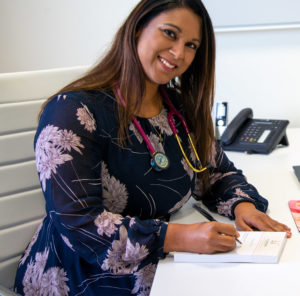
Kath Megaw: Candice, it’s so lovely to have you on. And I’ve been looking forward to this. We have done a few together before, but I’m really excited about this one because it goes out to such a wide audience. And would you maybe just give us a little bit of background and who you are? Who is Dr. Shah?
Dr. Candice Shah: Wonderful. Hi, Kath. How are you doing? It’s so wonderful to be here. I have admired you so much over the years. You have changed this frontier of parents’ approach to their kids regarding nutrition. And you’ve just been such a great trend setter and change maker. So I’m so happy to be here. So I am a paediatrician based at NET Care in One City Hospital. And when I launched my practice, my aim was to revolutionise and change things up, discuss more with parents, be on the same page, and actually just enjoy the holistic approach to the paediatric perspective. I think it has been so wonderful to do that thus far. And I’m really so excited to be on different platforms, but especially this one, because I think you’ve really set that tone so well in this particular field.
Kath Megaw: Wonderful. And recently, I think you were awarded an award. What exactly was that?
Dr. Candice Shah: Yes. So what often happens is there are a lot of tourists that come into Cape Town, and I see a lot of families from various countries. So there’s various perspectives as well on health care. Parents from First World countries and other Third World countries, and they have different views on health care for their children. And I think what the parents appreciated the most is that I have this holistic approach and that I don’t box anything. It’s all about sitting down and actually saying to parents, you know, let’s just talk about what you see as good health care for your child. And I think that was really the foundation. And so when I was nominated for the African Excellence Award, it was such a great award to receive, because it speaks to how different families from different countries also appreciate this sort of approach. So I was really excited to receive that. And I’m more especially so touched by how the parents have responded to my approach to paediatrics. I think it’s just, it really is revolutionising how parents see doctors and just feeling safe in your space.
[4:09 – 7:01]
Kath Megaw: And I know there are so many stories we can talk about. And on that note, with the holistic approach that you like to take, we’re going to jump into immunity and nutrition. And maybe we can start with when is the most vulnerable stage or is there a vulnerable stage when you see children coming in with repeated viruses and illness? And what does that look like?
Dr. Candice Shah: Well, I am very focussed on the first 1000 days of a child’s life. I am so inspired by just how rapidly children will develop during this period. And infections, even environmental changes, all of these things play a massive role, especially during this period. And I will say to parents often, please focus on these first few years of your child’s life. And this is why I really appreciate your work, Kath, because you focus so much on this. And I still will speak about your amazing publication and the Weaning Sense publication that I simply adore, because it really speaks to how you will support your child during this period. And kids are vulnerable right from the beginning. So if we see repeated infections within the first year, that’s when we bring in the theoretical approach of testing their immune systems, asking about genetic disorders in the family and those things. But really, if you have a holistic approach, especially during this time, you are able to help them so much by just focussing on the nutritional and environmental aspects together. And parents actually appreciate being specifically guided during this phase and given these tips, which you have so much great knowledge about.
[7:01 – 9:17]
Kath Megaw: That’s amazing. So would you say that children in the age group of those 1000 days, which is basically from birth to three years old, do you notice that there are certain things that will predispose a child? So let’s say that you’ve done your tests and a child, everything looks fine, there’s no genetic issues. What sort of both environmental factors and nutritional factors and maybe other factors would predispose a child to more frequent illness?
Dr. Candice Shah: Well, often I speak about VIP nutrients a lot. And that is so simple. If you just look at the various whole healthy foods that are available, and the wealth of nutrients you get from that, it’s just about making the perfect cocktail and getting the kids to have the correct nutrients in the correct whole food categories. So I often will say to parents, if there are a few nutrients you would focus on, go this route where you take whole foods, look at nutrients that are within these foods and actually make a little mix. You can do this in your own kitchen, you can ask your grandmothers for recipes, you can make this a great family affair, it can bring the family together in terms of bonding. And the parents are always so excited with this approach. And in terms of the environment, it’s very simple things, playing with your kids, singing to them, talking to them. These things help so much with regards to those neural connections, and allowing kids to actually build those synapses and have this healthy, holistic view in terms of social and emotional development. I always will say these are the very, very simple things that are sometimes forgotten, especially when you have a mountain of information in front of you as a child, and you’re overwhelmed. You will forget about the very basic nutrition and activities and those things you can do with your children.
[9:17 – 10:25]
Kath Megaw: So I always will remind parents to bring these two together and actually have fun with it. I love that. I think I was just the word that came to me when you were talking was connection. And I’ve really just been like exploring that word a lot recently and just trying to also in my time of practising and consulting is just to really see how you can bring that connection into the home. And I love the way you talk about your VIP nutrients, bringing it in simply, but doing it together so that children and families come back to the space where food can actually bring connection. Because so many times we see in our practices where there’s picky eating, people are very busy, people are very confused with what’s on Instagram, they’re judging their food against other people’s food on Instagram. I think we’re losing that connection. And that’s one of the simple things that I hear from you.
Dr. Candice Shah: It’s so true, Kath. And I do want to touch on the cultural aspects as well here. We all come from various cultures. I come from a Hindu culture.
[10:25 – 12:01]
Dr. Candice Shah: And so my predominant spices would be turmeric and cumin and all of those spices. And maybe if you are from an African culture, you have other spices and other family traditional recipes. So use that and bring that in. Show your children where your culture stems from and have fun with that while still adding those important nutritional aspects to those meals.
Kath Megaw: Love it. So just going back to repeated illnesses and infections, when you notice a child coming in quite frequently, would you say that would have an impact? So we’ve been talking about how nutrition can actually underpin a good immune system, but could repeated illnesses affect nutrition?
Dr. Candice Shah: Absolutely. So if a child has repeated illnesses, this is where the investigative process comes in with paediatricians. We are meant to investigate these children a little further. Take a look if there are aspects of that child that needs to be addressed. Allergies are a huge one. If a child has repeated abdominal cramps, bouts of diarrhoea, vomiting episodes, this is a really important opportunity for us as paediatricians to do those specific blood testing. Have the parents come in, do a counselling session and have a good history taken in terms of allergy.
[12:01 – 14:13]
Dr. Candice Shah: And it’s the same with repeated infective processes. So if children have repeated infections, that can also destroy the gut lining. And this is really important because your child will not be able to absorb those nutrients if they are ill all the time. So this is where those immune tests come in and checking on a child’s immunoglobulin status, those things come in. So this is why I love these kind of collaborative approaches because here I sit with the battery of tests maybe that need to be done, but it’s so important to link that with what is happening in the home environment and how are the parents then helping their children in terms of the nutrition and environment. So it’s about the test, but also about how to balance that and the at-home approach thereafter and also during a child’s illness. That is extremely important. So yes, of course, repeated illnesses in various forms, infective, non-infective, can definitely affect a child’s nutrition and can also affect the overall development of that child in the future. That’s also really important.
Kath Megaw: And I think that is where I’m very passionate is to break that cycle where you’ve kind of got the repeated illness creating poor nutrition, poor nutrition enhancing repeated illness, and it’s going back into that space. And that’s why I love your approach because you are saying, well, yes, we have repeated illness. We can do all these tests. We can come up with potentially a cause, but at the same time, we’ve got to also get the nutrition going and get that so that we can actually get out of this vicious cycle of eat less, want less, get sick, eat less, want less, get sick, you know, pattern.
[14:13 – 16:59]
Dr. Candice Shah: Absolutely. And with children, fortunately or unfortunately, you get one opportunity to get this habit correct and to have this child, for example, that is a picky eater. You know, if you do things that’s going to demotivate a child very early on, it becomes so difficult to undo those habits and sometimes impossible to undo those habits. And that’s why it’s so important to motivate parents and get this approach in as early as possible so that children are set for this sort of approach.
Kath Megaw: So maybe we can just, we always like to bring this into a very practical space. What would be firstly, some of your VIP nutrients that you feel are really important for parents to bring into the mix?
Announcer: This episode is brought to us by ParentSense, the all-in-one baby and parenting app that helps you make the most of your baby’s first year. Don’t you wish someone would just tell you everything you need to know about caring for your baby? When to feed them, how to wean them and why they won’t sleep? ParentSense app is like having a baby expert on your phone guiding you to parent with confidence. Get a flexible routine, daily tips and advice personalised for you and your little one. Download ParentSense app now from your app store and take the guesswork out of parenting.
Kath Megaw: What would be firstly, some of your VIP nutrients that you feel are really important for parents to bring into the mix?
Dr. Candice Shah: Okay, so I am, it really doesn’t need to be expensive but I’m really a fan of just breaking it down into very, very few important ones. And the one that’s often forgotten is how much protein can help a child. I will have so many families come in and say they have various meals but most of these meals are carbohydrate predominant. And it’s so important to take that step back and actually speak about how important protein is and the building blocks that they are and how much they can do for a child. So protein is definitely the first one and then zinc is a huge one. I always will bring in zinc and how it helps with those brush border enzymes, how it helps with skin integrity, really an important one. And then iron is a huge one as well. I will always say it’s often forgotten that you need to bring in iron and I love that some of the cereals now are fortified with iron. That is really great to see that the marketing companies are also coming on board. So that’s wonderful. And then also iodine.
[16:59 – 22:49]
Dr. Candice Shah: So this is great for us. We have iodised salt. So I always say that makes the parent’s lives so much easier. But iodine is a huge, iodine is a huge one with regards to thyroid function. So thyroid function is huge for various reasons, cognitive reasons, immune reasons. It’s so great to support a child’s thyroid function. And then some of the others are B vitamins, which are often forgotten as well. But B vitamins are also really important. And they are there. I would say those are my top five. B vitamins are so, if you think about a holistic approach, B vitamins are actually easy to get into a child’s diet. But you just have to have those tools and that direction as a parent. And if you can focus on these, at least these five basic nutrients, you will do your child so much of good.
Kath Megaw: I love that. I love those, your VIP. I think it’s such a lovely way to approach it. One of the extra ones I would probably add is also your vitamin C, which I think is also one of the magic immune boosting vitamins, because it’s something we see in our picky eaters often, or actually also where children sometimes intuitively will eat a lot of, they’ll eat fruits and then they’ll eat like raw veggies, but they don’t want cooked veggies. And I always say to parents, it’s okay because the vitamin C is there in the raw veggies and raw fruit. And it’s not necessarily available in the cooked, not that cooked is bad for the other reasons, there’s benefits, but the raw fruits and veggies often do really, really well. So a child loving a raw kind of baby tomato and a raw piece of cucumber, and then eating an apple and a banana, they get in some really good vitamin C. So I think it’s also to frame and educate parents that often they actually are doing the right thing.
Dr. Candice Shah: Yes, yes, absolutely. And now that you mentioned vitamin C, it’s also important to mention to parents that vitamin C aids in the absorption of iron. A lot of parents don’t know this fact, they feel that they need to sometimes overload their child with iron. And I have to try and remind them that actually if you get vitamin C in, it’s going to allow for absorption of iron as well, it’s going to aid in that. So you don’t have to, you know, give your child a huge dose of iron supplementation. If you’ve done the test and you see that your child is deficient of iron, of course, you need to treat that. But with regards to that nutritional support, if you just up the vitamin C in the maintenance phase, your child will be able to absorb iron better. So that’s important to remind them as well. And then I think as we come into one, we were talking before we started on something that we feel quite passionate about, which is our gut microbiome, and just the nutrients that support it from our pre and our probiotics. And I loved your take on that. So maybe you just want to share that with the parents.
Dr. Candice Shah: Yes, absolutely. So I, when I’m asked about probiotics, which I am asked about often at my practice, I will always say to parents, probiotics are important, because it helps your child, especially for those mums that have had to deliver via caesarean section. Your child has now not received that normal microflora that they would have if they had passed through the vaginal tract. So I will always say to the parents, if especially you have delivered via caesarean section, it is really great to get probiotics in, especially at the beginning, so that that microflora develops and then will allow the child to develop a great immune system. And it’s really great in terms of development as well, because there is this concept of the gut brain axis that I have really been passionate about, and that I’ve been researching more. And there are so many studies now being released about how if you support the gut microbiome, this actually helps with avoiding mental illness and helping children with development and all of these amazing papers that are being released. And so I’m really passionate about this as well, that if you support the gut well, you will support a child’s development, but you might even support them from a mental health point of view as adults. So look at that miracle that just supporting the gut can bring. And so when I’m asked about pro and prebiotics, I am passionate about supporting children right at the beginning from day one of life. And then when you’re bringing in solid foods, and this is what I love about your content, Kath, you will bring in those natural approaches to getting probiotics into the children. And I love your practical approach about the very simple things that are forgotten, like your insert you released on yoghurt/mas for children, and how wonderfully the probiotics within that can actually support the microbiome of a child.
[22:49 – 24:35]
Kath Megaw: That’s such amazing information to impart. What we really, I mean, in a nutshell, I think what we’ve both been discussing here, which I love is that it’s so attainable. It’s not going to cost parents fortunes to use nutrition to support their child’s immune system. And it’s in reach. And I love your just bringing back to the connection. It can be simple, your VIP nutrients. I love that. In the home, around a table, just doing something in the kitchen together, having that connection. And I think connection is also just so good for the immune system. We know that touch and physical kind of connection is really, really helpful when it comes to a healthy immune system.
Dr. Candice Shah: Absolutely. And if you look, it actually is more successful because I’ve experienced this with my own children as well. If they are involved, and the younger the kids are, if they are left to eat by themselves, they actually eat more. So it’s so great to have that connection and have that give and take from a parent and a child point of view. And you feed off your child’s energy, your child feeds off your energy. It’s just such a wonderful approach, because you don’t take the stress out of it, you actually enjoy the time more as well. And your child appreciates it because they assert some of their independence. And that is a huge thing. And that’s why the whole title of picky eater, you know, children are during that phase of development, trying to assert independence. This is a normal phenomenon. And us as paediatricians, we look for that.
[24:35 – 26:41]
Dr. Candice Shah: That’s why it’s labelled the terrible twos. And you know, your home is upside down, because all of the kids want to assert independence during the stage. And if you allow them to do this while eating as well, I will see from families that actually those kids eat better, I’ve seen this happen. And families come back and say, wow, it’s so much better. And I’m, I’m less stressed as a mum, because I’m actually letting my child and taking the lead from my child. And that is so great to see.
Kath Megaw: I love that. I love that. And yeah, I think just not creating a battlefield will increase the chance of your child choosing those nutrients, which means they’re going to get the VIP nutrients. And they’re going to actually be in a better space from an immune point of view from a health point of view, you’ll get to break the cycle of constant illness and poor nutrition. And I really your mums and dads out there, I think there’s some really amazing nuggets that we’ve spoken about today. And do you want to in the final minutes, leave a thought for parents?
Dr. Candice Shah: I always end most of these by saying please be kind to yourself as parents, this can be overwhelming. This is always what I say to parents. So don’t put the pressure on yourself. Don’t try and be perfect. Just be present and work with them and enjoy this process of parenthood.
Kath Megaw: I love that. Thank you so much, Dr. Shah. And thank you, mum and dad for listening to us. And we’re excited for this podcast to go out. Thank you. Bye.
Announcer: Thanks to everyone who joined us. We will see you the same time next week. Until then, download ParentSense app and take the guesswork out of parenting.

 Podcast