Transcript
(0:00 – 0:23) Meg Faure: Before we dive in, if this episode resonates with you, please follow or subscribe to the podcast. It helps us to grow and it also makes sure that you never miss these important real-world conversations. And if you know another parent struggling with mealtimes, please share this episode. It might be the support that they need right now.
(0:23 – 1:44) Meg Faure: In this week’s episode of Sense by Meg Faure, we tackle one of the biggest parenting challenges: picky eating. I am joined by my regular guest, Julia, who is now mum to one-year-old Aurelia and four-year-old Santi. And by Kath Megaw, a well-known paediatric dietitian and my co-author of Weaning Sense.
Today, we are going to leave you with a whole set of new strategies for your “beige eater.” So we’ll talk about why toddlers turn beige, what causes picky eating, and how control plays a role. We’ll also learn about how sensory personality affects appetite, choice, and flexibility. And also why Santi stopped his gregarious eating on a trip to Greece. It’s really, really interesting.
Kath shares a myth that so many of us subscribe to, and you will learn what not to do at the table. And then we also get a fabulous new toolkit. Amazingly, it means less pressure and more control to your toddler. But it really, really works. Kath also shares ideas like buffet-style meals, colour charts, and making food social again.
So whether you are a food-loving social butterfly or you are parenting a slow-to-warm-up “beige loyalist,” this episode is full of expert insights and real-life strategies to bring calm and nutrition back to the dinner table. So tune in now to make peace with picky eating and maybe even have some fun with food.
(1:44 – 2:32) Intro: Welcome to Sense by Meg Faure, the podcast that’s brought to you by ParentSense, the app that takes guesswork out of parenting. If you’re a new parent, then you are in good company. Your host, Meg Faure, is a well-known OT, infant specialist, and the author of eight parenting books. Each week, we’re going to spend time with new mums and dads just like you to chat about the week’s wins, the challenges, and the questions of the moment. Subscribe to the podcast, download the ParentSense app, and catch Meg here every week to make the most of that first year of your little one’s life. And now, meet your host.
(2:32 – 3:22) Meg Faure: Welcome back, mums and dads. As always, it is just fabulous to have you join us as you do each week. And as you know, some weeks we have a mum who’s an expert on her own baby, and sometimes we have an expert who’s going to clock in on a whole lot of very specific subject matter. And today, we’ve got a mix of both because we have got our regular guest, Jules. Welcome, Jules.
Julia: Hello, Meg. So nice to be here again.
Meg Faure: It’s awesome to have you back. So Jules and I have been chatting for over a year now as we tracked her second born, Aurelia, and her journey from birth until just over one. And last week when we were chatting—or last month when we chatted—she had just turned one and you started to chat about some picky eating concerns, not for her, but actually because you’d had a little bit of a fright from your firstborn because he is a picky eater and a toddler, and you were worried it was going to happen for Aurelia.
And I said to you, listen, if we’re going to talk about picky toddler eating, there’s only one person we can do that with and that, of course, is Kath Megaw. So Kath is with us. Welcome, Kath.
(3:22 – 3:23) Kath Megaw: Thanks, Meg. Always great to be here.
(3:24 – 3:52) Meg Faure: Yeah. So all of you will know who Kath is. She is my partner in crime in everything feeding because I think it’s such a specialist, a niche area, and so much conflicting advice. And Kath is really at the forefront of the research in everything to do with feeding, whether it’s neonatal, pregnant, babies, or whether it is allergy. And of course, picky eating is a real passion of yours, Kath. So when Jules mentioned that Santi was going through a picky patch, I thought so many other toddlers go through it. Let’s get you on and have a conversation about it.
(3:53 – 4:03) Kath Megaw: Absolutely. It’s so common out there. And like you say, most toddlers will go through a picky stage. It just depends on the severity as to how we navigate it.
(4:04 – 4:27) Meg Faure: Yeah. And as a mom, it all feels severe and you never know if actually they’re getting enough to survive on. So Jules, it might be useful for Kath and I and for our audience just to understand what Santi’s picky eating actually looks like and whether or not this is something that you should be concerned about. And if not, how you can navigate it as he kind of works his way through it. So tell us a bit about Santi.
(4:29 – 7:03) Julia: Okay. Gosh, I have so much to say on this topic. So let me see if I can maintain some focus. So in terms of his weaning, we started off with purees, but very, very quickly moved on to baby-led. Effectively did a combination of that for the first few months. But my preference was for baby-led weaning and certainly he was self-feeding very confidently quite young.
And until I would say about 14 or 15 months, he would pretty much eat whatever you put in front of him. Probably not lettuce, but everything else. And we at home, we have a fairly adventurous diet. We’re very big foodies. And so we eat quite a diverse and kind of interesting mix of kind of global cuisines essentially. So lots of spicy food and Italian food and all sorts of different things. So he wasn’t being exposed to a limited number of dishes. So that was sort of happening.
And then I don’t know if this is coincidental. I hope that it isn’t because we’re about to do the same thing with Aurelia. But we went on a big family trip at that 14-month, 15-month mark. And we were out of our comfort zone and obviously didn’t have as much control over what we were eating for about a month.
And by the time we came back from that trip, his picky eating had become quite obvious. To the point where at the beginning of the trip, for example, he would try—like we have a video of him eating calamari for the first time. And then by the end of the trip, the man was pretty much surviving on chips. He just, after a couple of days of being experimental, just refused to try anything new. And I don’t know if it’s something about the sort of intensity of that new experience that maybe had something to do with it.
But anyway, that’s sort of where the pickiness started. And that was a while ago. He’s now four. So his current diet is largely beige. I very much subscribe to the idea that he won’t try something that is not on his plate. So he is often fed food that I either have to eat myself or throw away because he won’t eat it.
So there’s a lot of like… he still gets all sorts of different things on his plate. Although I always kind of try and incorporate what they call a “safe food.” Although we can talk about that separately. That doesn’t always work for me either because he goes through phases of liking things and not liking them. But yeah, it’s a lot of quite simple beige foods. And the only green thing he eats is kiwi and grapes. So that’s where we are.
(7:04 – 8:19) Meg Faure: Yeah, and very common. And I think, I mean, it would be great for Kath to weigh in on the nutrition side and how you can start to get some diversity there. I just want to quickly weigh in on the sensory side and what probably happened on your trip. From what I’ve gauged about Santi, and of course, I’ve been much closer to Aurelia’s journey, and she is a classic social butterfly, is that I think Santi probably is a little bit more of a slow-to-warm-up. Your journey with him has definitely been a little bit more challenging than it has with her.
And I think what happens with your slow-to-warm-up is that they are just less gregarious eaters. And so when he was out of his comfort zone, that would have meant that the novelty of everything else around him—whether it was his sleep zone or whether it was the people he was visiting with, or even his gut microbiome and the difference in the little microbes that he was engaging with in Greece. I think he probably went to Greece because I know that’s where you’re going now.
I think all of that probably just was fine for the day or two. And then because he felt like there was some sort of familiarity of just you and your husband. But I think probably quite quickly, he was like, “Hold on, there’s too many variables here. So let’s try and control the one variable that I can control, which is what I will open my mouth for.” I don’t know. Kath, would you agree?
(8:20 – 8:53) Kath Megaw: Yeah, it’s exactly what I… you know, and that’s where food plays a role and sits in all our developmental stages as an area of control. It’s the space and the place that from birth right through to teenage years and even adult years that we have the most control over. So I think Meg’s assessment in that space is super accurate. I don’t think it’s a heavy on you that you have to feel bad or guilty. Life happens. It’s now how do you navigate it and how do you move forward with it?
(8:54 – 9:23) Meg Faure: Yeah, and the good news is that with Aurelia being such a social butterfly, I don’t think you’re going to have the same problem. I think you’re probably going to find that the novelty that comes with being in a foreign place is just going to… she’s going to lap it up and I don’t think you’re going to have the same kind of extreme reaction as you had with Santi. So, but I guess, Kath, all of that is maybe useful in hindsight, but for Jules right now, she’s dealing with a beige diet and a bit of kiwi fruit and grapes. So how on earth is she going to be able to… I mean, what should she be expecting and how does she extend his repertoire?
(9:24 – 13:34) Kath Megaw: So I think the important thing to remember is that the kind of two-to-five-year age group is the peak of the picky eating phase. And that is… and also from a physiological point of view, the body’s not very helpful in that they often live on, as we say, “air” in this phase where they just don’t seem to need as much food as what they did when they were younger. And this is normal and developmentally normal. So we don’t have the drive of appetite driving them to try or eat a bigger variety of food. So that is the challenge. So from an expectation point of view, it’s generally a slow progression as we attempt to bring in other foods.
I think if safety, as Meg mentioned, and his way… he kind of fell off a bit on your trip. I think if safety is his thing, exposure is important. So what you’re doing by letting him see the food… and exposure is not him eating the food. That’s not exposure. It’s not 15 times trying to give your child the same food. It’s that visibility of food all over the place that he sees, that he becomes safe with and he stays familiar with.
However, putting it ad nauseam on his plate all the time is not helpful because it’s constantly giving him the opportunity to say no and puts him in the control and the power seat. And because that feeding is very closely linked to an area of control and power, we want to take that away from him. So that he doesn’t have opportunities to consistently say no. There are going to be times when he’s going to say no, but you don’t want to… if you know he doesn’t like that and that, he’s going to say no all the time and he has that opportunity on a daily basis. And that’s what you want to decrease is the amount of times that he says no to just regain that power space.
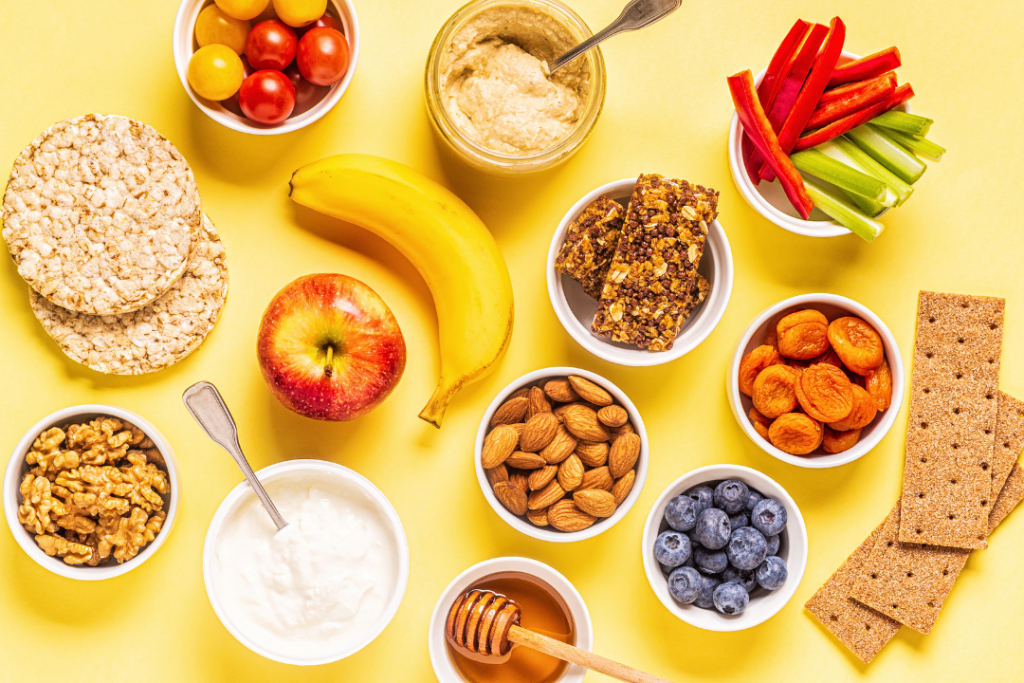
So what’s more helpful is a buffet kind of style where the foods are on the table. So he has access to them, but you are not saying he must. You are not putting it on his plate for him to reject. He then has to make the decision. So you need to… and we so want to, it’s so ingrained in us as parents to feed and to nourish and to give good nutrition that we want to consistently try and attempt because that’s what we know they need. That’s healthy for their bodies. That’s what they should be having. And so it’s actually to stop doing that, so that he can also just feel like it’s not all about what I’m not eating and the food.
It’s actually about the social interaction. It’s about the connection. It’s about a fun moment. It’s about having that space there in the feeding space. So the buffet style would be more helpful for you. And then include… if grapes and kiwi are the greens that he’s having for colour, then those get part of the buffet every night. One of the two of those would be on the buffet every night.
And then you can talk about the colours he’s for. So the colour chart works very well for four-year-olds where you can have a colour chart on your fridge with the different colours of veggies. There’s lots of downloadable ones. And then you can see in the family who eats all the colours and how many colours did we all try and eat in our day. And that’s a very nice way to…
(13:34 – 13:35) Meg Faure: I love that, Kath.
(13:35 – 14:04) Kath Megaw: Yeah, to do it outside of the mealtime. So education around food must not happen at mealtime. That’s not cool. Cause that’s an anxiety-producing place. And in anxious spaces, we can’t learn new stuff. So when we educate about food, we do it away from mealtime so that he’s open to it. It’s fun. It’s exciting. There’s an incentive. But at the mealtime space is when you want to just engage and just kind of neutralise that. And it’s… this is the food. He likes his pasta, but there’s a grape. So he has pasta and grapes as an example.
(13:35 – 14:04) Meg Faure: And Kath, I mean…
(13:35) Julia: Okay, that’s so interesting.
(13:35 – 14:22) Meg Faure: Yeah, and I don’t know about you, Jules, but I’m loving this idea of this little buffet, a little smorgasbord out in front of him. Kath, I mean, obviously there’s going to be the beige foods, which he’s going to definitely go for. So maybe your pastas or your chicken nuggets or your potato fries or whatever. You’re going to have those two greens, one or the other on that smorgasbord. What else should Jules present to him, to Santi on that smorgasbord in order to try and get the whole variety?
(14:05 – 15:38) Kath Megaw: So what’s quite important at the age of four is that he can be eating as often as possible with family. So your other foods that you would be serving would be part of that smorgasbord, part of that buffet. So a salad, if you’re doing a salad, would be there. If you’re having mince and pasta, you can do the pasta in a dish and you can do the mince in a dish and then you all dish up from that buffet style.
And then what I always challenge parents to do is to actually include one of their preferred foods on your plate without making a scene about it. Putting a piece of kiwi on your plate, even though you think, “I don’t really want kiwi with spaghetti bolognese.” But it’s just that food is social, food is connection, food is what we share. And so you are sharing his preference in the subconscious hope that he will eventually share in your preference.
And there’s some really good studies and research that show that, that that is very powerful as opposed to consistently “Try this,” “Do you want this,” “Taste this,” “This is this.” You can have that conversation at the table. If you made the food, then your partner can say, “Oh, this is delicious.” That’s absolutely fine. But not to like, “This is delicious, try some” and you consistently… And I always say, you know, put ourselves in their shoes. If someone consistently says to me, “Try this, it’s nice,” and I don’t want to, I will start to feel very against that food, even though it’s not really about that food.
(15:39 – 15:45) Meg Faure: So I think it’s, yeah. Yeah, very useful, Jules. I can picture a little smorgasbord in Greece.
(15:46 – 16:30) Julia: Yeah, let’s hope. Gosh, an enormous one, hopefully. Yeah, it’s funny that approach to eating being so direct and like, “No, you must taste this, it’s delicious.” It’s funny, it comes out so strongly in the older generation. So for example, with my parents and with Vito’s mom, when we’re all together and the kids are… we’re all eating… that’s exactly what they say kind of over and over again.
And obviously it is to a certain degree generational and, you know, we didn’t have the kind of food science that we have now. But it’s… yeah, and I always, I don’t really know how to handle it. It’s quite a prickly situation. You’re like, “Can you just stop pressuring the man and just leave him? Like, just don’t engage around the food. Just let it be there and you must decide. Stop sort of constantly saying, ‘Oh no, you just need to taste it. It’ll be fine.’”
(16:31 – 16:46) Meg Faure: That’s so interesting. Kath, what do you… because that intergenerational thing is an issue. The amount of talks I’ve been on where people have asked me about their parents giving their children sweets or, you know, just like having discipline around the table that they don’t have in their own homes. How do you kind of advise people to navigate that?
(16:46 – 16:54) Ad Break: They won’t sleep? ParentSense app is like having a baby expert on your phone guiding you to parent with confidence. Get a flexible routine, daily tips, and advice personalised for you and your little one. Download ParentSense app from your app store and take the guesswork out of parenting.
(16:55 – 18:15) Kath Megaw: So I think it’s also again that’s a conversation not to have in the moments when it’s happening. You kind of have to let that ride because it’s happening. To have it before the moment and to also just explain and educate… you know, educate the generation above us into some of the science and the research and to say, “You know, I’ve had access to this information from a qualified professional who understands the research and this is not shown to be helpful in this case.”
Maybe for your daughter, that’s not an issue for her. She’s a social butterfly; it’s just going to be engaging for her and enticing and bring her in. But for him, it’s very off-putting and it makes him feel anxious. Because remember children’s ultimate goal is to please us, that’s what they want to do. And so when we are offering food to them that they don’t like or want to take in and they reject it, they’re not pleasing us and that creates anxiety. But they don’t want it. So they get anxious just at the mere idea that they don’t want it, but to please you they would need to eat it. So it’s this wrestle that they have and then the whole food space just becomes anxious. So it’s again just having an honest, honest conversation prior to and not in front of them.
(18:15 – 18:20) Meg Faure: Yeah, and blame me. You can always say, “I spoke to Kath and she said…”
(18:20 – 19:12) Julia: I’ll give her your business card. I must say it’s a kind of a joke I think with a lot of people where going to granny’s house is always like, “The rules are all out the window and she’s feeding you all sorts of things you shouldn’t.” We definitely have an element of that going on where Santi essentially gets force-fed sugar from the moment he steps into granny’s house to the moment he comes home. And then please imagine the mood when he gets back to my house. Yeah, so it is tricky. But it is the kind of thing where in the moment is so frustrating you can’t address it… it’s not the right time and space. But I must say it’s not a “once-off fix” in our experience, certainly with our particular situation. It is a bit of an ongoing battle that needs to be addressed in a long-term way.
(19:13 – 20:55) Kath Megaw: I think it’s also recognising the desire of grandparents to want to treat and then to give them other options to treat with. You know, I think that generation was very much brought up “food is treat,” “food is like where we find our space.” We are realising the damage that causes; that’s not helpful for our own bodies later on in life to have that mentality around food.
And so it’s really to say, you know—and now parents say when they’ve actually had the conversation around treats and the way to treat—that you can do it with a sticker book or a new little car if that’s the collectible or Pokemon or whatever they collect in the moment, or a visit to the beach or whatever. That there’s time treats and there’s other “thing” treats; it doesn’t have to be food treats. So that’s sometimes helpful so it’s not taking away that privilege of a grandparent to treat.
And then also using grandparents powerfully to actually help with food expansion. Because there is some really good research showing that grandparents can have a very significant role in actually expanding palates. And that’s because it’s not related to mom and what mom and dad are saying. It’s a treat space, it’s a place where I get to be a bit different, I get to break the rules a bit. And “Grandpa’s eating a bowl of broccoli, I might just try it because it looks enticing because Grandpa’s eating it.” So there is that element and I’ve had a few parents who’ve actually found it quite beneficial to use that. So again, bring them in and say, “You can be helpful, but this is the way you can be helpful” and actually guide them in that space.
(20:55 – 21:21) Meg Faure: And Kath, if we think about Santi and his kind of beige and Kiwi and grape diet, at what point should Jules be worried? I mean, at what point… Initially, he doesn’t expand his repertoire, he’s really picky… Jules, you haven’t really spoken about quantities that he eats. Maybe you can just fill us in a little bit about how he eats during the course of a day and then Kath can give some ideas on whether or not you should be concerned.
(21:21 – 22:31) Julia: Look, when he is eating a food he’s comfortable with, he has a healthy appetite. He will eat a decent amount. And he’s not really a snacker. And I don’t know if that’s kind of ingrained in him or it’s a result of the kind of eating we do. I am not a snacker—like it doesn’t ever occur to me. I just eat three meals. And I suppose in a way I’ve maybe influenced him in that. But he doesn’t express hunger directly anyway between meals.
And he eats normally a fairly healthy breakfast. It’s probably the most varied meal that he eats because he will eat three or four different things. And then he will never touch his snack box at school unless it’s something incredibly tempting like a banana bread. Then he’ll eat normally a fairly standard, same one of two or three things at lunchtime—again a healthy portion like a whole toasted sandwich, for example. And then dinner is normally the battle. And I lose it sometimes, he won’t eat it. Sometimes he goes about eating a single thing. And I don’t fight him on it. I leave it alone. But I would say he probably eats enough overall.
(22:31 – 24:27) Kath Megaw: So calorie-wise, he’s probably then adequately getting what he needs. Obviously, the two areas that picky eaters in that age group tend to struggle are the protein foods—because they just take a lot of work to chew—and then the other area, if that’s not the case for him, is your micronutrients. So those are your vitamins and your minerals and all those good things to keep your hair nice, your skin healthy and your immune system strong. That’s often where we as parents do have more panic and concern.
So the solve for that… and I always say the journey of sorting out picky eating is twofold. The first is kind of looking at the nutrition lack and rehabilitating in that space. We call that like the “nutritional rehab” phase. I always liken it to if you’ve got a broken leg. If your leg is broken, you’re going to need crutches in the beginning, which is totally good and legitimate and we’re very grateful for them. Once the leg is healed, we actually want you to come off your crutches so that you can start using the leg. And you’re doing rehab but you might use it like only one crutch and then go maybe a few hours a day on a crutch and eventually will go off.
So there’s a place for nutritional supplementation. And you can either do it in like a good multivitamin which is a very good idea. And which one do you recommend, Kath? So the one I’m recommending at the moment in South Africa—and you can actually get it internationally as well—is Nutriburst. It’s quite accepted by the picky eaters because that’s important. It’s all great to give a multivitamin, but if they don’t want it then it doesn’t mean anything. So they’re little trolls and the kids quite like them in the four or five age group; it’s quite popular. They’re like the little gummy sweet trolls but they’ve got no sugar, no gluten, vegan. So and they’re really good and there’s a range, Nutriburst.
(24:28 – 24:34) Julia: Okay and then in the Nutriburst range do you have different makers at different age groups? How does it work?
(24:35 – 25:12) Kath Megaw: No you don’t have different age groups but you have the different ranges. You get like a general multivitamin and then I actually like the one with the immuno Nutriburst which has got the omega-3 in. Which I quite like for the picky eaters because they very seldom get omega-3 in their diet and that’s so important for concentration and brain development. And it’s actually got a combination of a probiotic in it so it’s got that benefit as well so it’s a really nice one.
And then the other thing is if the calories were lacking or there was protein lacking, there are some good complete nutritional supplementations that you can give at the end of a day. Because the reality is a well-nourished child desires food and wants to eat. So the more malnourished a child becomes the less they want those nutrients that they’re not getting. So we actually need to rehab it back, put it back in quickly, easily, either with a multivitamin or nutritional supplement like a milk drink or something. And then once we’ve corrected that we can start… what often happens is they spontaneously actually start looking for foods with those nutrients in. The body’s very, very clever how that works and it actually boosts the desire to eat.
And I just want to mention that fact that he eats quite a lot… he’s like a “triangle” which is actually very normal for this age group. They eat like a triangle: a lot in the day and as the day goes on less and less. And technically we should all be intuitively, mindfully eating like that. So I think the idea—our shifted focus in the world often is a massive meal at the end of the day. And if the kid doesn’t eat that then you know… And I mean Meg would talk to the sensory-wise: they just cannot cope with a massive diverse colourful meal at the end of a day. They actually need a “breakfast”—something bland, something colourless just to calm their whole sensory space. It mustn’t add to their already overloaded sensory space of the day.
(26:45 – 27:11) Julia: So Kath, would there be any sense in giving him a good solid breakfast because that is the meal he takes? And I’m particularly thinking about poor Jules while she’s travelling now because it is going to be a juggle anyway travelling with two children under the age of five. And then in the evening if he decides not to eat anything because that’s just not his thing either, just give him a smoothie or a toddler shake or just abandon the meal altogether? Would that be your advice?
(27:12 – 27:29) Kath Megaw: Yeah I think a toddler shake at the end of the day is brilliant. Just a milky calming drink. We know all the nutrients are in that. If you can’t make a smoothie when you travel, then yeah a shake. You can get the ready-to-drink shakes and travel with a few of those. Can be quite helpful.
(27:29 – 27:48) Julia: Those ready-to-drink shakes… I’m presuming if this falls outside of the feeding regulations when we’re allowed to talk about brands… are we able to? Yeah because we’re talking about over three-year-olds. Okay all right so if I mean would there be a couple of brands that you would just recommend because I know moms are going to want to know. So what sort of… I mean is… I think PediaSure might be one?
(27:48 – 28:46) Kath Megaw: Yeah so PediaSure is one. PediaSure stands alone uniquely on its own in that it’s the one shake that’s very advantageous when you’re doing nutritional rehabilitation. But if kept on too long it can just kind of fill up all the gaps and the child doesn’t need to eat. So it’s that fine line… using it during the critical times. And that’s why that would be a shake you could use at the end of the day if a meal was kind of consistently being eliminated. And while you’re travelling I would definitely recommend that because that’s a complete meal in one. And then you get your follow-on growth milks. So the different companies from Nestle… they have the Nido. To your Alula have the kids, Novolac have kids and kids four plus. So those are your supplementary that you could kind of fill a few gaps and give it towards the end of the day.
(28:46 – 28:55) Meg Faure: That’s brilliant Kath, that’s so useful Jules. I’m sure that is very useful to take along with you.
(28:55 – 29:31) Julia: Yeah big time. I mean I would be lying if I said that I haven’t been thinking about it for months. I’m not actually as concerned when we get there because we will have our own kitchen. If I need to I can make him a plain pasta. I know when we’re out he’ll have access to chips, like it’ll be fine. But it’s the travelling. It’s the… and it’s a very gruelling trip. It’s 24 hours of planes and boats, ferries and cars and it’s going to be feeding him. But yeah I’m gonna try that. If I can also sort of see if he has a taste for it now. I’m not going to surprise him with it on the plane.
(29:31 – 29:58) Kath Megaw: Yeah I think go and have a look. You can get the ready-to-drink so you don’t have to mix it up. It’s not taking powder and water with. And there’s different flavours. And let him try a few of those ready-to-drink options. Dischem is probably your easiest place; you’ll get your biggest range there. And you can go and just give him the trial. And then they do quite like the tetra packs because it’s their own, they can hold it. And um yeah go with what works definitely on the flight.
(29:58 – 30:08) Meg Faure: Lovely. Gosh what a lovely practical episode we’ve had. Jules we’ve almost come to the end of our time. Is there anything… any gaps that you think weren’t filled in the content that Kath shared now?
(30:08 – 31:10) Julia: I think we could have a three-hour-long episode on this exact topic. I mean I could think of… certainly the practical tips especially around how his sensory personality approaches food and control… I think that’s very, very helpful. It’s you know the sort of family meal style setup. We do always eat together actually almost always three meals a day at least one of us is eating with him and normally his sister. So that social aspect is being fulfilled. But I think the way they present food is something that we can definitely shift. So I think that’s something that I’ll start to experiment with. And I do think it’s just going to be quite interesting as well seeing how he reacts to the environment when we are away. It’s going to be an interesting mixture of being in a fairly unfamiliar place but he’s also going to be surrounded by all of his cousins and all of his aunts and uncles and his granny and grandpa… all of his grandparents actually. The entire family’s coming so it’s going to be really interesting but there’s lots of food for thought I suppose. Kath thank you.
(31:10 – 32:35) Kath Megaw: Yeah I think just to mention and just for other people listening out there… what I really want to just stress—and I stress it over and over again—is that you weaned him so well. You did the collab, you used some baby-led weaning, you did some puree feeding. And I’m really on a mission at the moment to say that it’s not on you. Moms always come in with a picky eater and blame how they weaned the child and it’s got very little to do with that. What the weaning does do is give you peace of mind that he’s had such a variety, he’s been exposed to so much, you’ve trained his taste buds so well. That must just give you hope for the future that he’s going to most likely take to those foods over time again. And that has been shown over and over in research.
So that’s the goal of weaning. It’s not that we will avoid and omit all picky eating because there are so many other factors involved around that. And you know there’s a lot of noise out there that “baby-led weaning is the only way that your child won’t be picky” and that is absolutely nonsense. It is one aspect that’s going to help with the development of feeding but that relation to picky eating is so much more complicated than whether you gave a puree with a spoon or whether you ordered a baby-led weaning.
(32:35 – 33:10) Meg Faure: Yeah no absolutely Kath and I do think that as quickly as it came it will go Jules. You’ll just suddenly one day wake up to the fact that wow he was on five foods and I suddenly doing 15 and then before you know it he’ll be eating you out of house and home. And I can remember I had a very very picky firstborn boy eater and as skinny as anything. I mean people used to see him and I think they thought I’d malnourished him. And as an adult, as a teenager, he was rowing and I mean it was just impossible I could not feed him enough you know so… probably not terribly helpful because I’m sure people told me that at your stage as well but I promise you it’s coming.
(33:11 – 33:46) Julia: Yeah for sure.
(33:11 – 33:46) Meg Faure: Excellent well thank you both. Thanks guys. Thanks Jules and yeah thank you Kath as always for the input your wisdom your practicality I couldn’t do without it. And Jules we will chat to you again I think once more before you head to Greece about Aurelia and so we’ll be able to chat a little bit about the plans for that trip when we talk next.
(33:46 – 33:48) Julia: Cool look forward to it thank you very much.
(33:48 – 33:53) Meg Faure: Cheers bye bye.
(33:53 – 33:53) Outro: Thanks to everyone who joined us we will see you the same time next week until then download ParentSense app and take the guesswork out of parenting.

 Podcast